


6 best developer marketing channels you should focus (+examples)
Learn how to pick the right developer marketing channels using the Compound-first, Amplify-next framework with examples from leading developer brands.

Distributing content is as difficult as producing it. According to the Content Marketing Benchmarks, Budgets, and Trends report from CMI, over half of marketers point to visibility or distribution challenges as obstacles to content marketing success.
In developer marketing, the urgency is greater. Developers are pickier with where they want to spend their time. Stack Overflow’s 2025 Developer Survey reveals that 82 % of developers visit the site at least a few times per month, and 25 % daily or more often. That consistency makes it one of the few reliable touchpoints in the developer workflow.
But before we talk about distribution, it’s worth emphasizing one thing: distribution only works if your foundation is solid.
As Lee Robinson (formerly at Vercel) puts it:
Docs make or break developer products
If your documentation is incomplete or unclear, no amount of distribution will fix that. The first investment every developer-focused team must make is great docs. That is the baseline.
Once your documentation and technical content are in place, distribution becomes the multiplier. It’s what ensures your tutorials, SDKs, and product updates are discovered, reused, and shared in the right places.
Developer marketing typically rests on three pillars:
- Research: talking with developers, digging into keyword data, persona research
- Creation: writing tutorials, references, SDKs, demo apps, samples
- Distribution: making sure what you build is seen, shared, and reused in places developers already trust
This blog focuses on the third pillar, distribution. It’s the bridge between having something useful and turning that usefulness into adoption and growth. Simply publishing on your blog or tweeting about it is not distributing. Real distribution means delivering value where developers already are so your work can be discovered, trusted, and shared.
Over the rest of this post, I’ll walk through how to select the right developer marketing channels, the developer metrics you need to measure and highlight examples of how companies use these channels effectively.
TL;DR
If you have no funds, then choose compound-first channels
- GitHub
- Stack Overflow
If you have funds, then choose amplification channels
- Developer newsletters
- Creator partnerships
- Developer events
How to choose a developer marketing channel?(channels+examples)
Distribution is effective only when it happens in the spaces where developers are already active. Developers spend their time looking for answers, exploring tools, and engaging in conversations that help them ship faster. A good developer marketing strategy means placing your product and content directly into those workflows, so developers encounter your product naturally.
But choosing which channels to prioritize depends heavily on resources. Every developer-focused team faces the same tradeoff: what do we do if funds are limited, and what do we do if we have room to spend?
This is where the Compound-first, Amplify-next framework comes in. It’s a simple way to think about how to prioritize your efforts based on your team’s resources and stage of growth.
Compound-first channels exist to build lasting credibility and organic discovery. They grow slowly but retain value for a long time. These are the channels where developers learn, collaborate, and exchange real knowledge. The content you publish here, whether it’s a guide, discussion, or example, becomes part of the ecosystem. It’s how your brand earns trust, one contribution at a time.
Amplification channels exist to accelerate reach. Once your foundation is strong, these channels help you scale awareness and meet new audiences at speed. They rely on ads, partnerships, and events, helping your content show up in the spaces where developers explore new tools or make adoption decisions
The smartest developer marketing teams treat these two modes as sequential, not separate. You earn credibility first, then amplify it. That’s how the best B2D companies grow, by compounding trust before scaling visibility.
Now, lets look at what compound-first channels mean in detail.

Inside the launch of VectorAI DB
How Actian positioned VectorAI DB for developers and drove adoption from day one



Compound-first channels (+examples)
When budgets are lean, the best strategy is to put effort into distribution assets that keep working over time. This is why many open-source and early-stage dev marketing teams lean on compound-first channels that grow in visibility and trust over time.
A single thoughtful post or discussion in the right place can stay visible for months, continue showing up in search, and keep bringing in new developers without additional spend. These kinds of assets grow over time and become a steady way to reach developers, even for early-stage teams with limited resources.
In this section, we’ll look at three compound-first channels that deliver strong distribution (along with examples) which needs no heavy budget requirements.
1. GitHub
GitHub is the largest open-source collaboration platform and one of the main places developers spend their time. They use it to find libraries, evaluate tools, and learn from real code. Before adopting a new technology, developers often check a repository’s README, issues, and activity to see if the project is reliable.
GitHub’s Octoverse 2024 reported nearly one billion contributions to public repositories in a single year, showing how deeply it is embedded in the developer workflow.
Developers spend time here:
- To evaluate credibility (stars, forks, contributors signal whether a project is active and trusted). To find practical examples and working code that solves real problems.
- To contribute or file issues, which directly influence the tools they rely on.
- To learn: many developers use open repos as educational resources, modeling how others solved problems.
Pros, cons and KPIs you need to track:
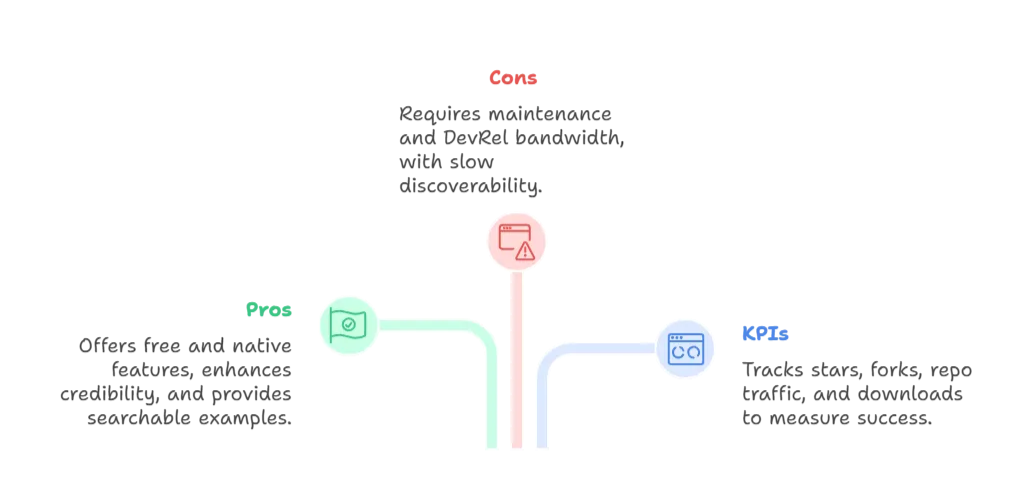
Pros
- Fully integrated into the developer workflow, making discovery natural.
- Repositories and code samples act as long-term assets that stay discoverable.
- Builds credibility through stars, forks, and contributions from the community.
Cons
- Requires ongoing maintenance to keep repos updated and dependencies current.
- Stale or unmaintained projects can damage trust.
- Harder to push visibility immediately since its organic
- Needs developer involvement for issue triage, pull requests, and discussions.
KPIs to Track
- Stars, forks, and “used by” references on public repositories.
- Unique visitors, clones, and repo traffic analytics.
- Number of external contributors or pull requests.
- Referral traffic from GitHub to documentation or product site.
- Mentions or backlinks from GitHub in community posts or blogs.
Pro tip: Stars and forks show interest, but they don’t tell you who’s using your repo. GitHub enrichment helps you see which companies and teams are behind the activity, so you can spot early adoption signals hidden in issues, pull requests, and clone behavior.
Who did it well?
1, Highlight.io, an open-source monitoring tool, they have nearly 9,000 stars and hundreds of forks on GitHub, making it one of the primary ways developers discover their project. The team actively curates the repo with clear issue labels like “good first issue”, publishes a public roadmap linked back to GitHub (see image below), and encourages contributions through a well-documented onboarding flow.
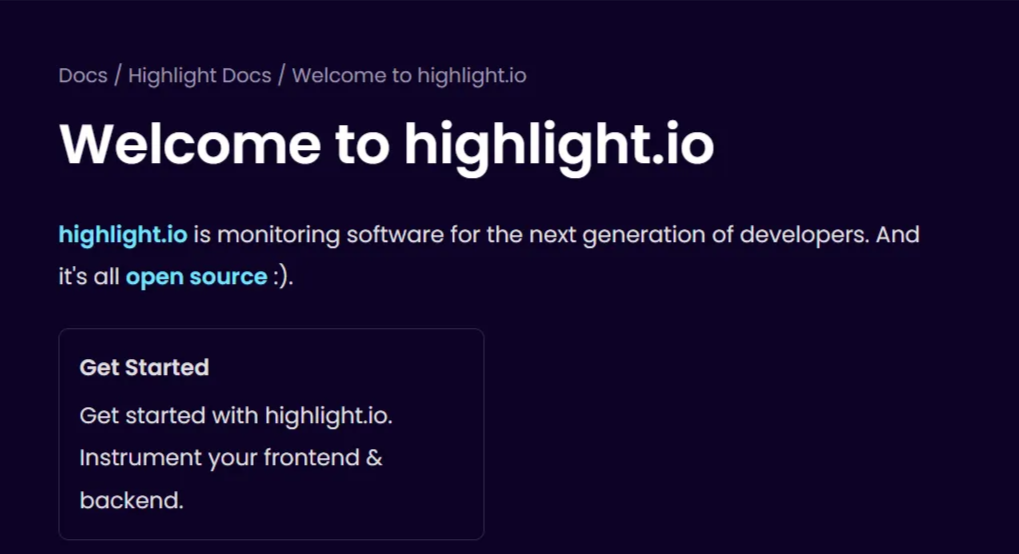
This approach turns GitHub into more than a code host. Every pull request, issue, and star becomes a discovery surface, helping Highlight.io reach new developers without heavy spend on campaigns.
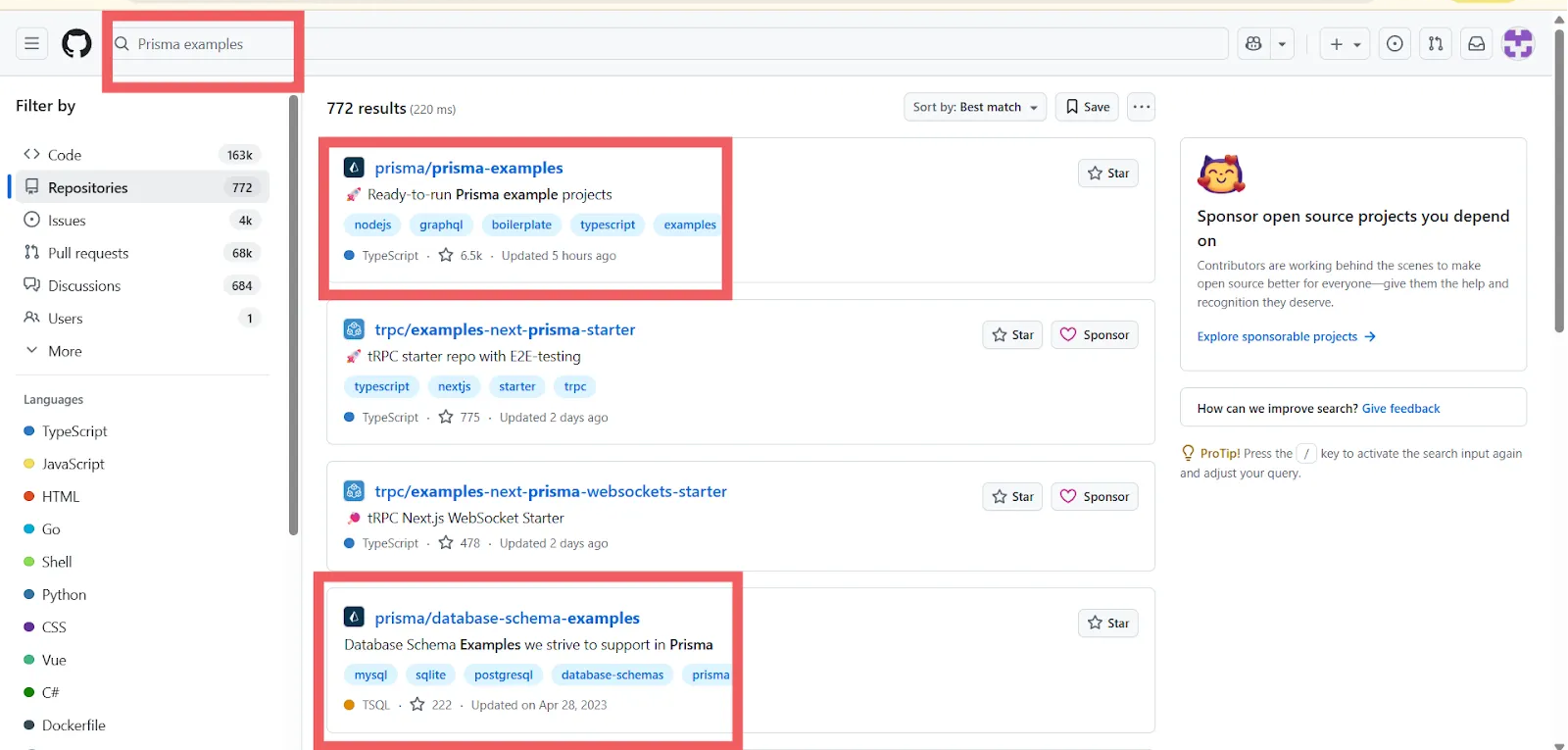
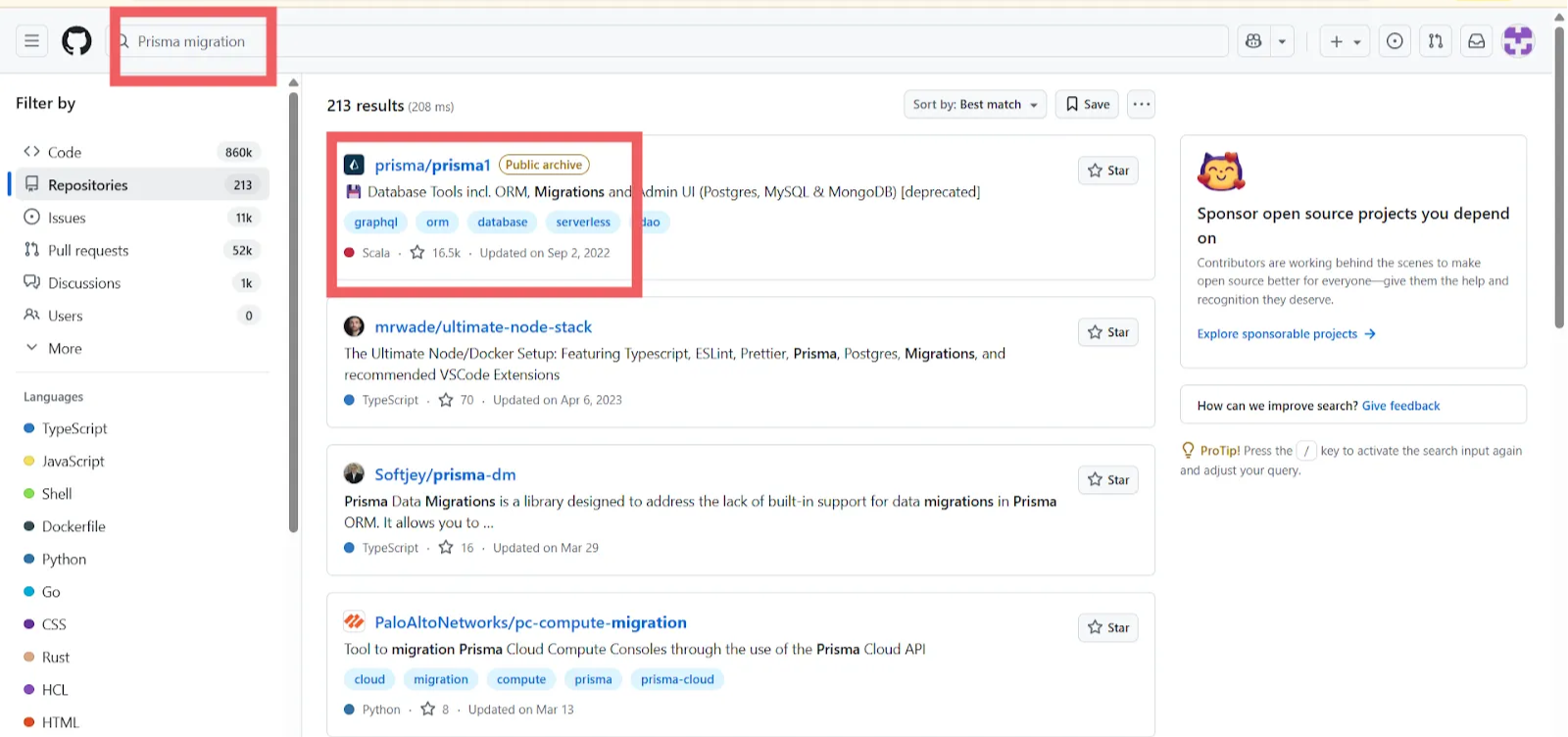
2, Prisma, the open-source ORM for Node.js and TypeScript, has made GitHub a primary distribution channel by ensuring its repos are highly discoverable. Their main repo prisma/prisma has more than 40k stars, and their dedicated prisma/prisma-examples repo with over 6.5k stars consistently ranks in GitHub search for terms like “Prisma examples” or “Prisma migration.” This repo has become a trusted entry point for developers, offering ready-to-run projects that accelerate adoption and invite contributions.
I searched for the keyword ‘Prisma examples’ on GitHub (See image below) I found the Prisma repo showing up first among 772 results.
Similarly, the Prisma migration repo ranks first on GitHub when I searched for ’Prisma migration’.
2. Stack Overflow
Stack Overflow remains one of the highest-intent developer channels. The 2025 Developer Survey reports that 82% of developers visit at least a few times per month, and 25% visit daily (Stack Overflow Survey 2025). Developers come here when they’re blocked, searching for specific error messages, or evaluating implementation options. A single high-quality answer that links back to your canonical docs or repo can keep driving traffic and adoption for years.
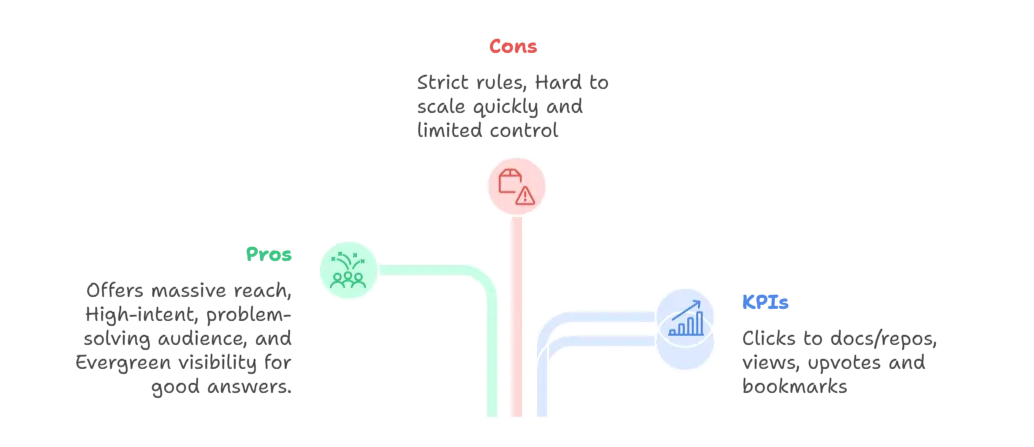
Pros, cons and KPIs you need to track:
Pros
- High-intent audience of developers who are solving real problems.
- Long-term visibility since well-answered questions stay relevant in search.
- Builds technical credibility when engineers or DevRel contribute directly.
- Drives referral traffic to documentation, tutorials, or repos.
Cons
- Strict moderation against promotional or low-quality content.
- Requires consistent engagement and technical expertise to answer effectively.
- Harder to scale quickly because visibility depends on upvotes and tagging accuracy.
- Limited control over placement and community responses.
KPIs to Track
- Views on questions tagged with your product or technology.
- Click-throughs from Stack Overflow to your documentation or site.
- Growth in questions or answers under your product tag.
- Mentions or links from Stack Overflow that appear in search results.
Who did it well?
1, Postman has built a strong presence through the postman tag, which now contains thousands of questions. Developers find solutions through highly visible, long-lived threads. For instance, “How to get to request parameters in Postman?” has received 120k+ views and remains active years after it was posted.
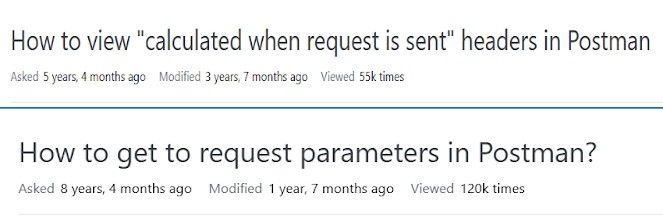
These threads act like evergreen distribution assets, introducing new developers to Postman while linking directly to its official documentation and workflows. By showing up where developers are already solving problems, Postman turns Stack Overflow into an ongoing discovery channel.
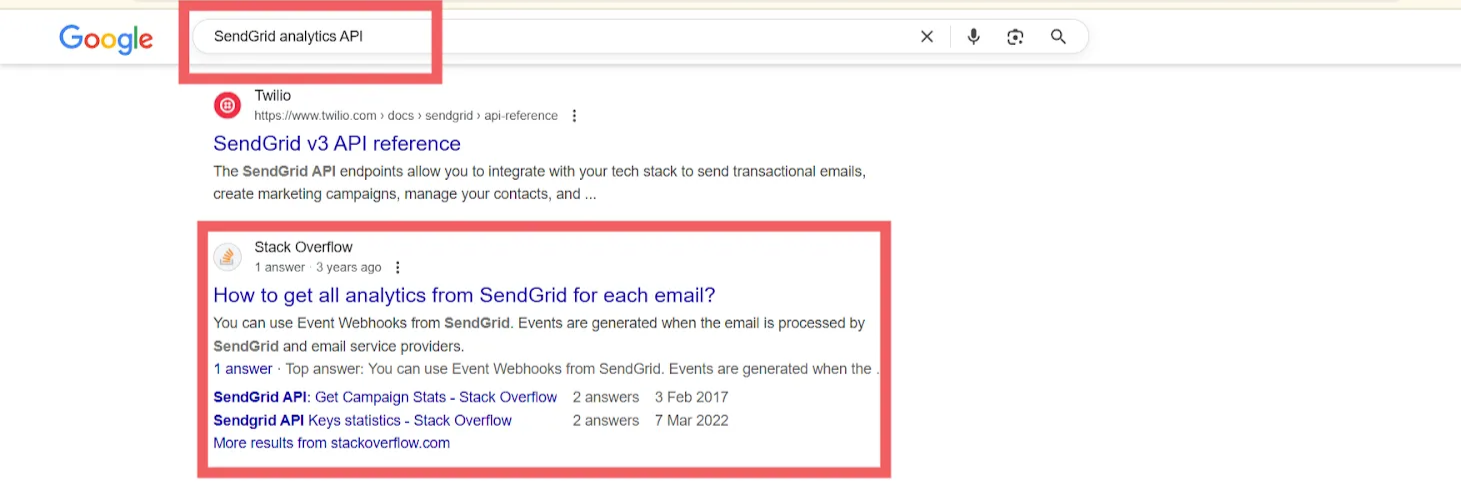
2, SendGrid has an active presence on Stack Overflow where developers troubleshoot email delivery, API integration, and analytics issues. For example, the question “How to get all analytics from SendGrid for each email?” has been viewed thousands of times by developers.
The accepted answer points directly to SendGrid’s Event Webhooks, showing how Stack Overflow serves as a practical support layer for developers. Many developers find SendGrid through these well-ranked threads, where verified answers link to official APIs and implementation guides.
Serving the developer community is imperative to Twilio’s success … we want to meet these developers where they are and Stack Overflow offers tools and resources which help our developer community thrive- Twilio’s VP of Developer Network, Andrew Baker
Over time, these threads are bookmarked, shared, and repeatedly discovered in Google search results when developers type in problem-driven queries like “SendGrid analytics API” or “SendGrid webhook events”
Queries like “SendGrid analytics API” lead developers to this Stack Overflow thread, which points them to SendGrid’s API documentation (see image below)
3. Reddit
Reddit is a hub for thousands of technical communities where developers actively discuss tools, frameworks, and best practices. Popular subreddits like r/programming, r/webdev, and r/devops attract millions of monthly visits. For example, r/programming alone has over 4.5 million members, making it one of the most visible spaces for developer conversations. For what actually works (and what gets banned) when you do reddit for devtools, we wrote up eight lessons from running it for clients.
In early 2024, Reddit signed a licensing agreement with Google that gives Google Search direct access to Reddit content. Since then, Reddit threads have increasingly ranked at the top of search results for technical keywords, making them “always-on” distribution assets for developer-first companies.
In fact, According to a study by Semrush on AI search and SEO traffic, it was found that Reddit is the second most-cited domain in Google AI Overviews, behind Quora.
Pros, cons and KPIs you need to track:
Pros
- Large, active developer communities where discussions stay visible for months.
- Posts often rank on Google, especially after Reddit’s partnership with Google for AI and search integration.
- Authentic conversations build long-term credibility.
- No upfront spend required
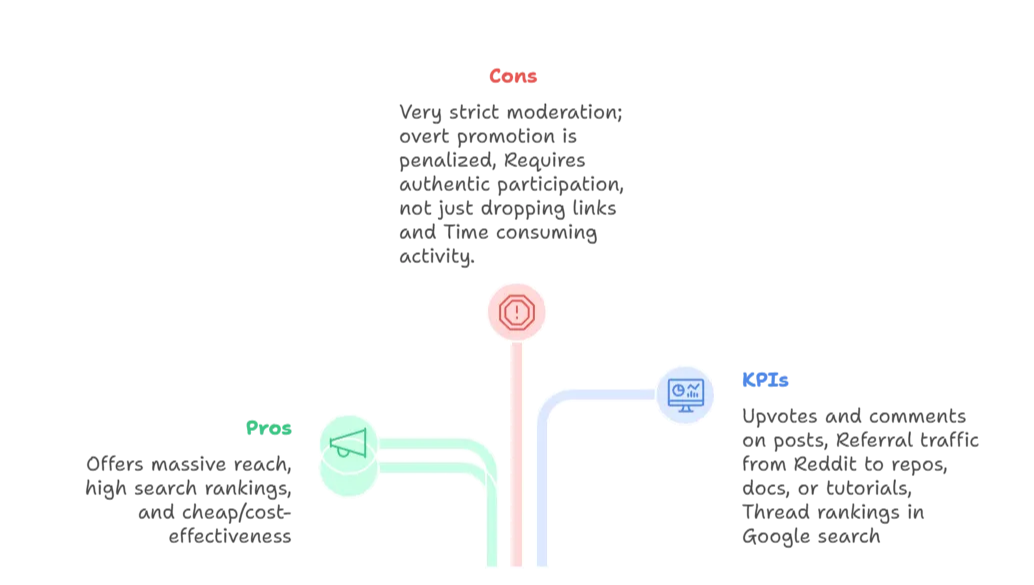
Cons
- Strict moderation rules against over promotion.
- Requires genuine participation and understanding of community norms.
- Discussions are fragmented across subreddits, making reach uneven.
- Time-intensive to monitor and maintain presence.
KPIs to Track
- Upvotes and comments on posts or discussions mentioning your product.
- Referral traffic from Reddit to documentation, blog posts, or repos.
- Growth in product mentions across relevant subreddits.
- Longevity of posts in search results or AI overviews.
- Participation rate and engagement within targeted communities.
Who did it well?
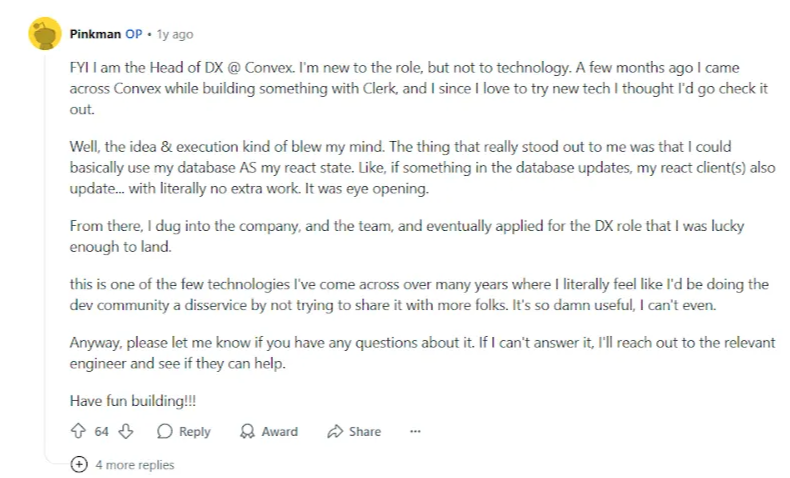
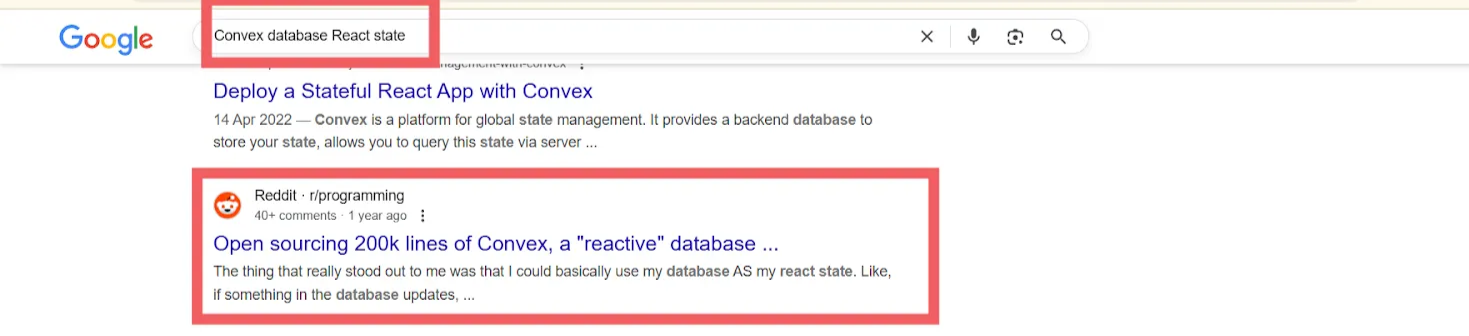
1, Convex showed up in r/programming with the post “Open sourcing 200k lines of Convex, a reactive database built from scratch in Rust.” The thread pulled in 159 upvotes and 49 comments.
The Head of Developer Experience at Convex shared his story about discovering the product (see image below), and his reply felt more like a peer-to-peer note than marketing, and no wonder the comment had 64 upvotes. (check image below)
Not just that, he also jumped in to answer developer questions (see image below).

These authentic interactions made the launch feel less like a promo and more like developers talking to developers.
The thread stays visible in Google and keeps bringing visitors over time (see image below)
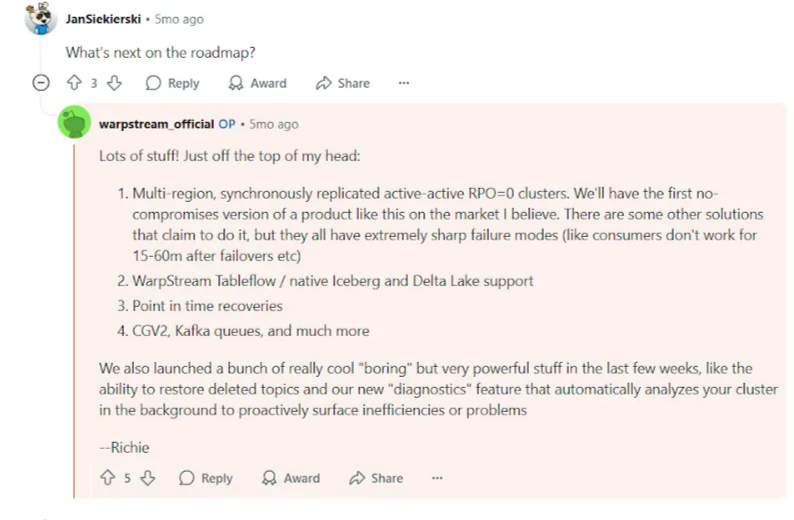
2, WarpStream’s founders used Reddit as a distribution channel by hosting an AMA in r/apachekafka titled “We’re the co-founders of WarpStream. Ask Us Anything.” The thread pulled in 43 upvotes and 64 comments.
The team engaged directly with developers, answering questions openly and keeping the tone conversational rather than promotional (see image below)
When questions touched on deeper topics, they linked to blog posts, making the AMA more useful beyond Reddit (see image below)
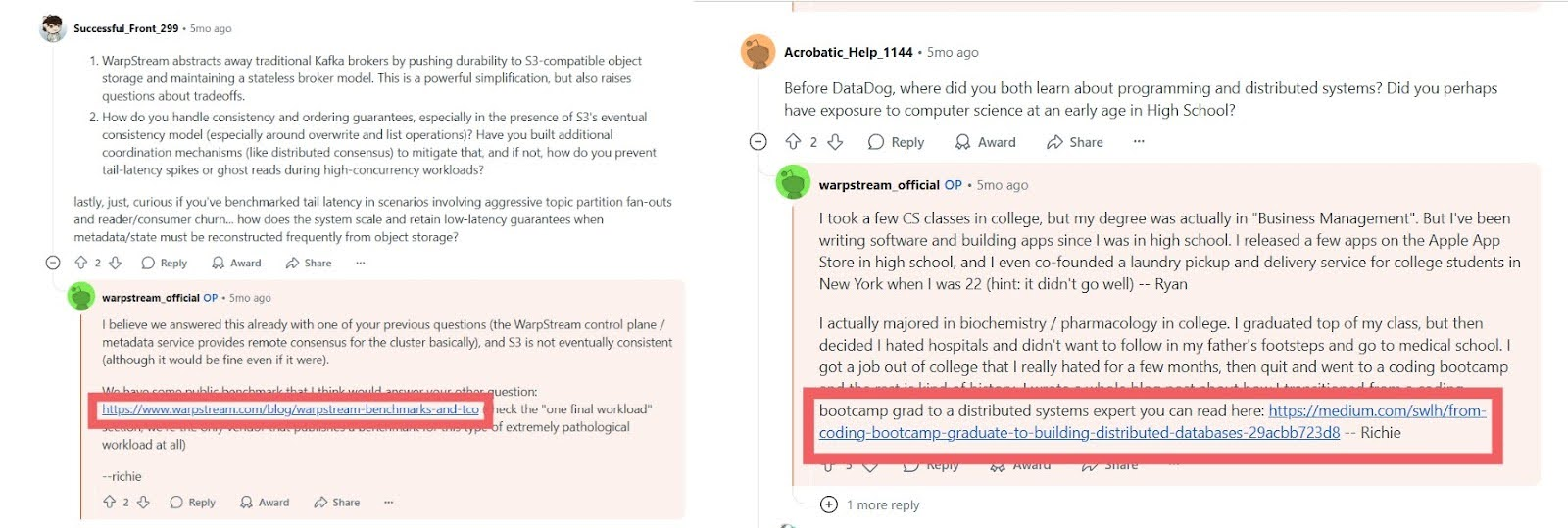
What they did was they collated all the questions they were asked and the answers they gave and published it on their own site as a blog recap (WarpStream blog recap).- Bravo!
This turned a one-time community event into ongoing distribution that includes:
- Visibility in a niche subreddit
- Authentic content they published on their site
- threads that continue to resurface in search for developers exploring Kafka alternatives.
Amplification channels (+examples)
More budget gives you room to build momentum. It lets you take what’s already resonating with developers and scale it with intention through partnerships, community programs, or paid placements that extend reach without diluting credibility. The goal is not to get attention once but to stay visible where developers learn, evaluate, and make decisions. Amplification channels help you extend the reach of your strongest content and keep it in front of the right audiences over time.
Data from the State of Developer Marketing 2023/24 Report shows that most teams put the biggest share of their budget into paid advertising and events, while content marketing continues to deliver the strongest results for developer audiences. That balance tells its own story: distribution spend works best when it amplifies technical content that already carries weight.
A useful way to think about allocation is the 70/20/10 rule, seventy percent on what’s proven, twenty on what shows promise, and ten on what’s new or experimental. It’s a reminder to put most of your effort behind what’s driving real engagement while still leaving space to explore.
The key is to invest where developer attention already flows and where strong technical content can travel further with the right support. Now let’s look at the top 3 channels that consistently deliver reach and credibility when more resources/funds are available.
1. Newsletter sponsorships
Developers trust what they choose to subscribe to. Newsletters are part of that routine. They use them to stay informed, learn about new tools, and keep up with changes in their language or ecosystem. A good newsletter filters out noise and delivers only what matters, which is why it often feels more reliable than social feeds or ads.
When your product or content appears in a newsletter that developers already read and trust, it becomes part of their learning flow
Some of the most respected developer newsletters today include TLDR Newsletter, which reaches more than 1.25 million readers, JavaScript Weekly, a long-standing resource in the JavaScript community This Week in React, which connects with tens of thousands of React developers each week Featuring or sponsoring content in these newsletters puts your technical work in front of engaged, relevant audiences who actively look for new tools and ideas.
It’s important, however, to be clear about which audience each newsletter serves so your content fits naturally and adds value. For example, a guide on front-end monitoring fits well in This Week in React, while a deep dive into backend performance might perform better in TLDR or ByteByteGo
Pros, cons and KPIs you need to track:
Pros
- High signal-to-noise ratio since newsletters are curated.
- Reaches highly targeted audiences with established trust.
- Can be tested quickly to measure ROI.
Cons
- Visibility depends on newsletter frequency and format.
- Limited control over placement or context.
- Works best when tied to strong, relevant content.
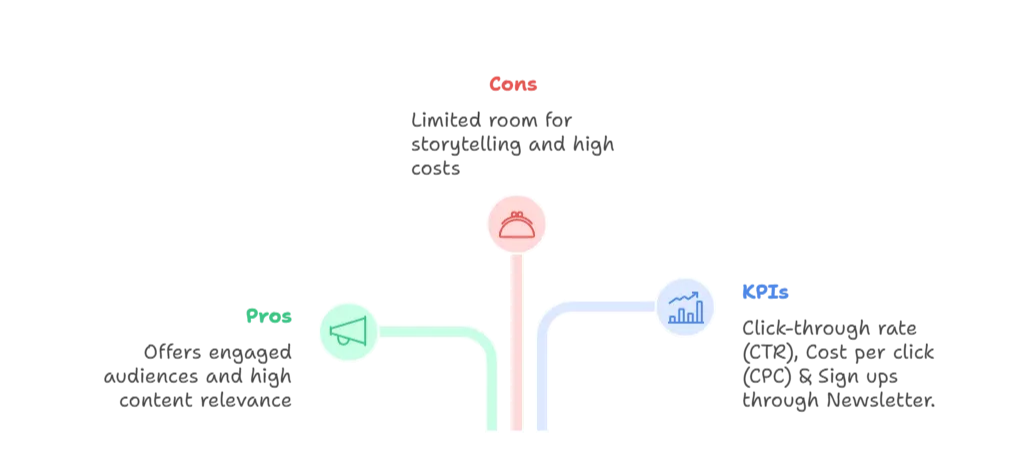
KPIs to Track
- Click-through rate (CTR) from newsletter placements.
- Referral traffic to product pages or documentation.
- Conversion rate of visitors coming from newsletter links.
- CPC
Who did it well?
1, Paragon’s core audience includes developers, product managers, and startup founders that build integrations and internal automation tools. TLDR’s readership maps closely to those groups, which gave Paragon a clear overlap between their ideal users and the newsletter’s audience. Another reason for Paragon to do newsletters was that they understood that their target market was “highly technical and notoriously difficult to reach” via traditional ads.
Example of Paragon’s promotional newsletter:
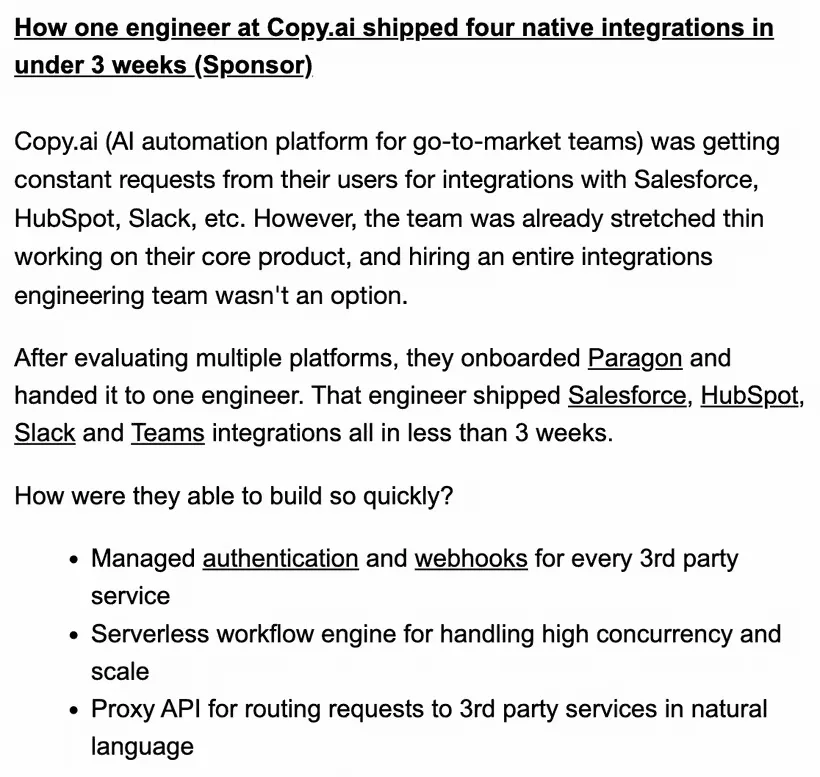
Because of this alignment, sponsoring TLDR made strategic sense. Their campaigns delivered over 2.35 million impressions and 14,000 clicks targeting tech professionals. TLDR then became one of Paragon’s top-performing channels for pipeline growth which proves that when content resonates in the right place, it could drive quality traffic in a way that feels credible.
TLDR allows us to connect with engineers who aren’t on social media…Our CTO reads TLDR but doesn’t scroll LinkedIn – Forrest Herlick, Growth Marketing Manager, Paragon
2, Sentry ran a sponsorship in JavaScript Weekly, one of the most widely read newsletters for JavaScript developers. The featured post was titled “Instrument, monitor, fix: a hands-on debugging session,” a topic directly aligned with what Sentry helps developers do every day. You can see Sentry listed across several recent issues which is a deliberate choice to show up where front-end and full-stack engineers already pay attention (see image below)
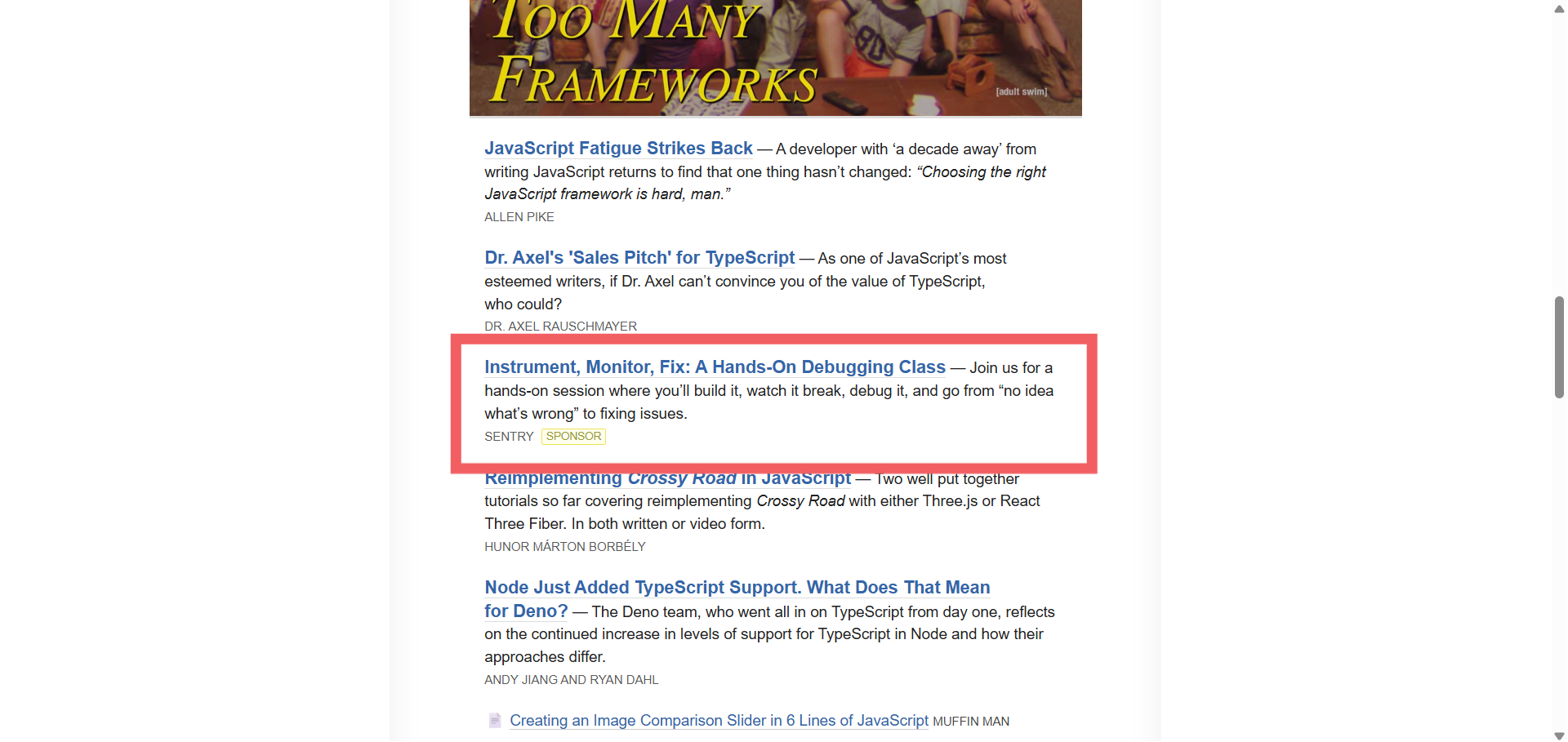
This placement made sense for Sentry. The newsletter reaches developers who care about debugging, performance, and observability which is the core pain points Sentry solves. By sharing a hands-on learning resource instead of a product pitch, the content felt native to the audience. With over 170,000 subscribers, JavaScript Weekly gave Sentry consistent visibility among engineers evaluating tooling for production monitoring and error tracking.
2. Community workshops and events
Community programs and events are one of the most practical ways to reach developers at scale. They bring people together to learn, collaborate, and experiment with new tools. Developers prefer to test products hands-on, and workshops or hackathons give them a space to do exactly that.
The State of Developer Marketing 2023/24 Report by the Product Marketing Alliance shows that more than 60% of developer-first companies invest in meetups, conferences, and hackathons as part of their distribution strategy These programs help developers experience a product in context and build familiarity through real use.
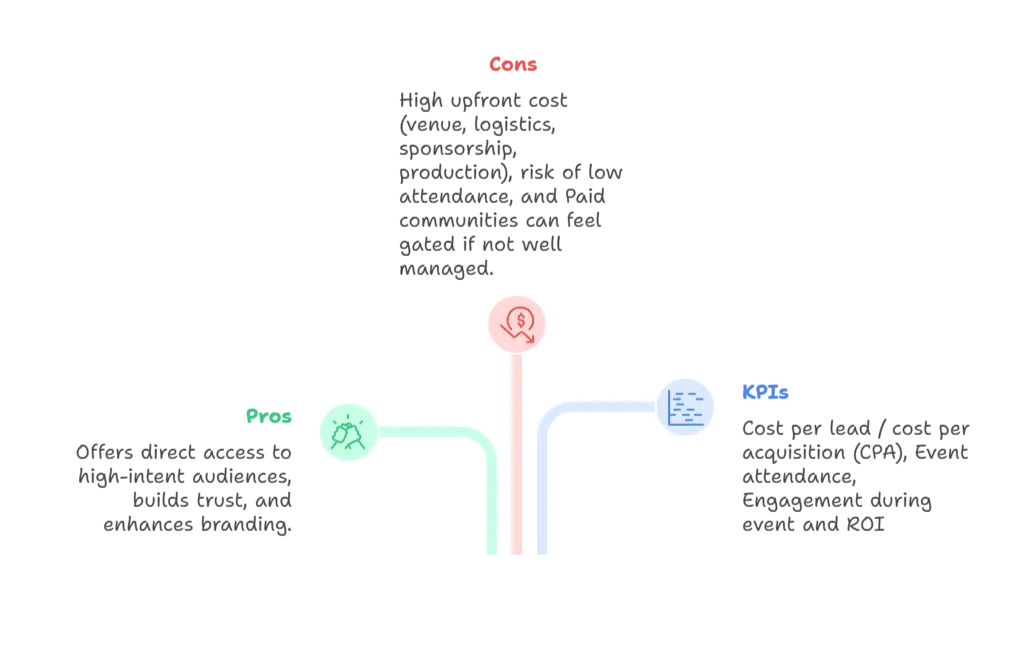
Pros, cons and KPIs you need to track:
Pros
- Deep, high-quality engagement with the product.
- Direct feedback from real users.
- Strengthens community visibility and trust.
Cons
- Requires planning, logistics, and budget.
- Reach can be limited if not documented or promoted later.
- Measuring results can take time.
KPIs to Track
- Number of participants or registrations.
- Cost per lead/cost per acquisition
- Post-event product activations or sign-ups.
- Mentions or posts from attendees.
- Repeat participation in future events.
Who did it well?
1, Vercel hosted Next.js Conf 2024 in San Francisco with over 1,000 developers attending in person and tens of thousands joining online. The event focused on community, product updates, and practical learning through workshops, keynotes, and partner sessions. Speakers from Vercel and the Next.js ecosystem shared insights on performance, React Server Components, and the future of web frameworks.
The conference helped Vercel strengthen its developer community and introduce new capabilities in Next.js. Partner integrations and sponsor sessions provided additional visibility, while the YouTube recordings continue to drive consistent engagement. Next.js Conf now serves as a recurring touchpoint for developers building with the Vercel ecosystem.
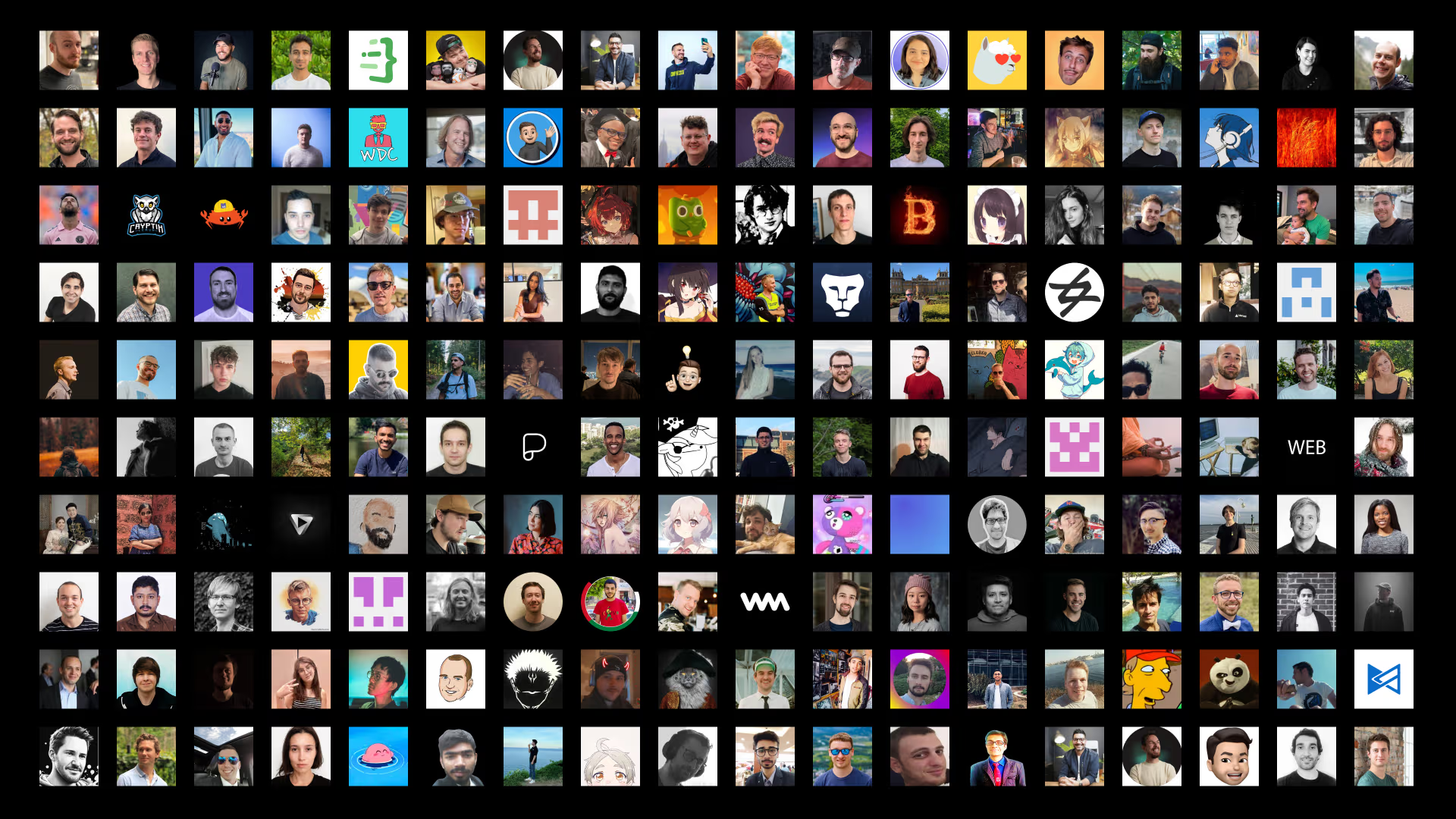 The event was a hybrid one, allowing people from all around the globe to attend it.
2, HashiCorp hosted HashiConf 2024 in Boston and online, gathering infrastructure, security, and DevOps engineers from around the world. The multi-day event featured keynotes, deep technical sessions, and hands-on workshops across Terraform, Vault, Nomad, and Consul. The company published all main sessions and announcements on YouTube, turning the conference into an ongoing learning hub for the HashiCorp ecosystem.
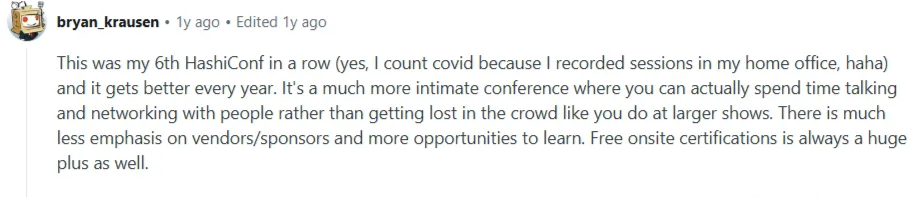 Events like HashiConf help companies build credibility, reinforce positioning, and maintain a trusted presence within the developer community.
3. Creators and Influencer Partnerships
Developers trust other developers more than they trust brands. This is why creators and educators have become an essential part of how products reach new technical audiences. Their content blends education, opinion, and storytelling, making it easier for developers to discover and understand new tools through people they already follow.
Creators like Jeff Delaney (Fireship) and Theo Browne (t3.gg) have become important voices in the developer ecosystem. Their content reaches millions of developers who rely on their tutorials and breakdowns to stay updated with new tools and technologies.
Jeff Delaney’s Fireship channel is known for concise, high-impact videos that explain frameworks and developer tools through quick tutorials and project builds. His “100 Seconds of Code” series introduces concepts like Firebase, Docker, and Supabase. When Fireship features a product for example Snyk or Supabase, it immediately gains visibility among active developers looking for trusted recommendations. That's how powerful influencer marketing is.
Similarly, Theo Browne ( t3.gg) creates long-form content focused on React, TypeScript, and open source tooling. His videos emphasize practical workflows and the realities of shipping production-grade software. When Theo collaborates with platforms like Supabase or builds with frameworks such as Next.js, it gives developers an unfiltered view of how these tools perform in real projects.
These creator partnerships work because they show the product in use, not in theory. Developers see the tool integrated into real workflows, explained by someone they already trust. This makes creator-led distribution one of the most effective ways to reach technical audiences with context and credibility.
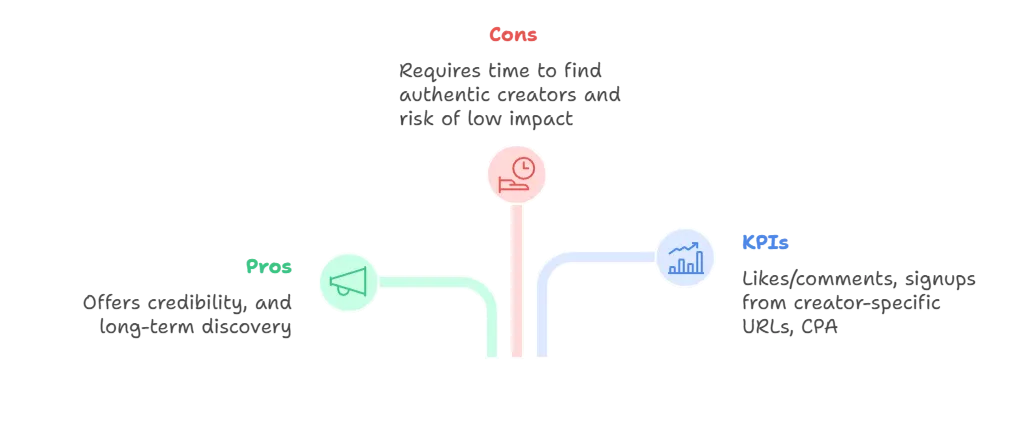
Pros, cons and KPIs you need to track:
Pros
- High engagement from targeted developer audiences.
- Builds awareness quickly through trusted creators.
- Offers reusable content that can be shared across channels.
Cons
- Requires careful creator selection to maintain authenticity.
- Limited control over message framing or creative direction.
- May require long-term relationships for consistent results.
KPIs to Track
- Views and watch time on sponsored content.
- Sign-ups from creator specific URLs.
- Cost per acquisition
- Mentions or discussions following video release.
Who did it well?
1, Railway, a deployment platform for developers, has grown reach through creator-led content. For example, a YouTube video titled How to Setup Auto Deployment From GitHub Using Railway shows a full stack deployment using Railway and has amassed high engagement over time.
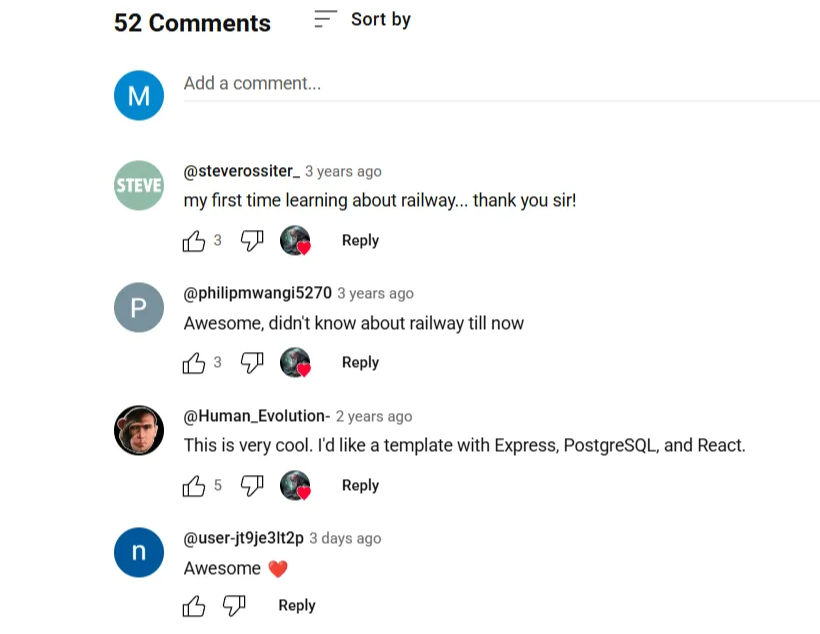
This approach works because creators embed Railway into real workflows and encourage viewers to try it themselves. When developers see Railway used in projects they relate to, it lowers friction to experiment. Creator content acts as both education and endorsement, helping the tool earn trust among active builders.
2, Pulumi, an open-source infrastructure-as-code platform, has built visibility through independent creator tutorials and technical walkthroughs. I saw a video titled “Pulumi Tutorial | Build Infrastructure in TypeScript” that walks through setting up cloud resources with code, step by step. The video has thousands of views and appears in search results (check image below) for developers learning infrastructure automation.
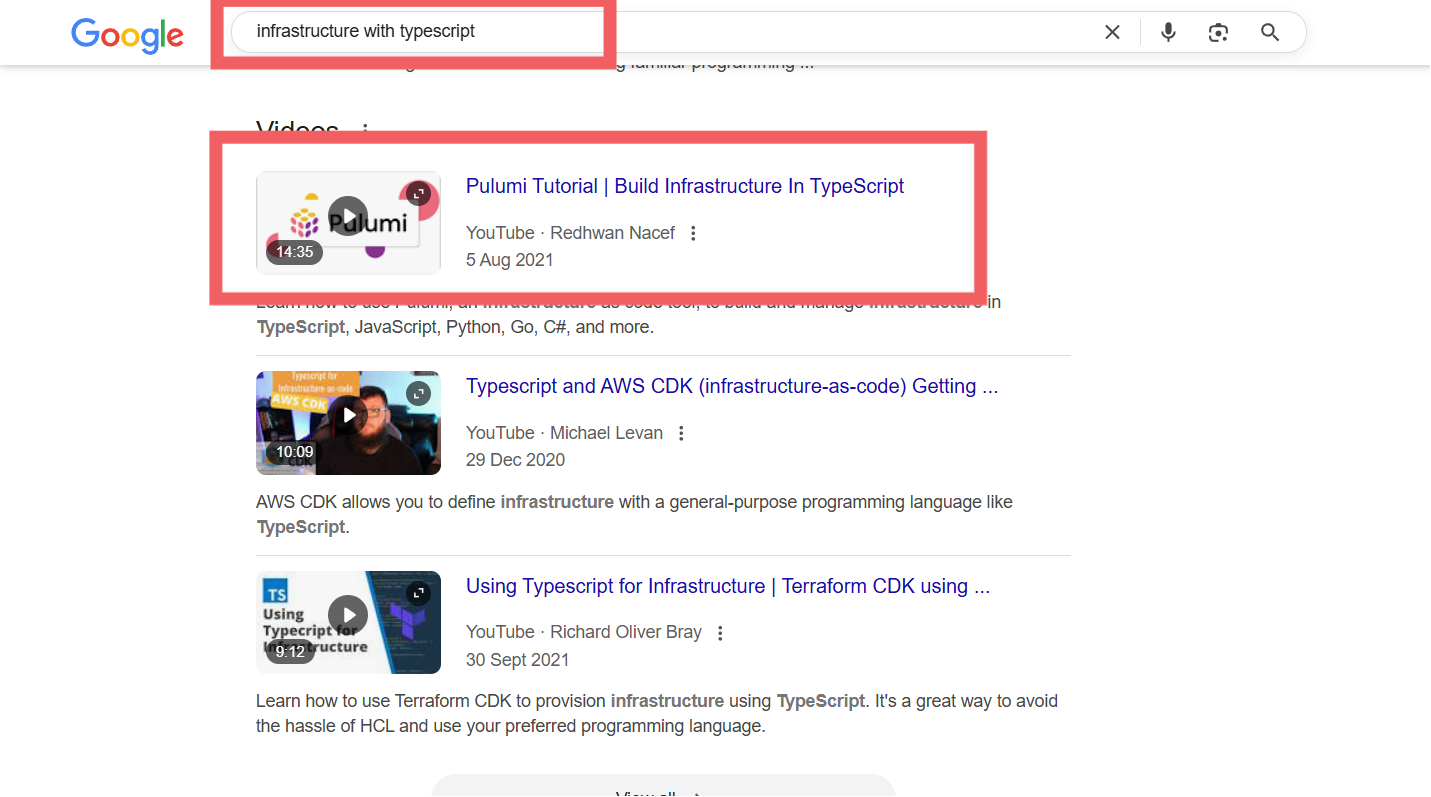
This works because creators explain Pulumi in practical, real-world contexts. They show how to deploy, manage, and automate infrastructure using familiar languages like TypeScript and Python. Such videos become ongoing educational assets that help developers discover Pulumi organically while learning modern DevOps workflows.
I recently wrote a blog around how to create developer video content, check it out.
What’s next?
When I think about developer marketing channels, I see it as participation rather than promotion. Each channel, such as newsletters, events, and creator collaborations, gives you ways to engage with developers and help them understand and use your tools.
Use the Compound-First, Amplify-Next framework to sequence that work. First focus on activities that build lasting credibility. Once credibility exists, use amplification to scale reach and attention.
Consistent participation builds trust. Every helpful answer, clear guide, or hands-on session adds to your reputation. As that reputation grows, amplification becomes more effective and sustainable.
At Hackmamba, we’ve built distribution channels that reach over 2,000 active developers in our Discord community, and the number keeps growing. We also share our clients’ content at no cost on our social media accounts, which are followed by developers who regularly engage with technical content. When you work with us, your content automatically goes through these channels for better visibility. If you need help, talk to us today.
FAQs
- Is Hacker News a good place to distribute technical content?
Hacker News is a good place to share technical content. Developers often visit it to explore new projects, read case studies, and learn from technical discussions. Posts that share insights or lessons from real experiences tend to do well.
- What is a developer marketing strategy and why is it important?
A developer marketing strategy is a plan to reach and engage developers through the channels they already use. It helps companies share useful content, tools, or ideas in ways that fit naturally into a developer’s workflow. The goal is to make it easier for developers to find and understand products that can help them build faster or better.
- Do developers really hate marketing?
Developers prefer marketing that helps them learn or solve problems. They respond well to clear, honest communication about how a product works. When content focuses on practical examples or shows how something can be used, developers are more likely to pay attention and engage.
- How can I target and engage developers across multiple channels?
You can reach developers by being present in the places they use for learning and collaboration. Channels like GitHub, Stack Overflow, Reddit, and newsletters are often part of their daily routine. Sharing tutorials, guides, or examples in these spaces helps start conversations and build awareness naturally.
- What is the best way to make technical content easy for developers to find?
Create content that answers real questions and fits into how developers search for information. Make sure it is optimized for search and shared in the right communities. When your content shows up where developers look for solutions, it continues to bring in traffic and engagement over time.