
Technical content marketing for developer tools: the complete guide
How to build a technical content marketing program for developer tools: formats, strategy, team, distribution, and measurement, with real results.

Technical content is often the first product experience a developer has. If the quickstart fails, the API reference is incomplete, or the tutorial skips the error they are staring at in their terminal, they rarely open a sales chat. They leave. On the other hand, content that solves an implementation problem, answers a question in the middle of a debugging session, or explains a trade-off clearly earns trust long before someone signs up.
Technical content marketing is the practice of creating and distributing that kind of content consistently. It spans tutorials, documentation, API references, implementation guides, comparison articles, videos, and community discussions that help developers discover your product, evaluate it against alternatives, integrate it successfully, and recommend it to others.
For developer tool companies, technical content is not a supporting marketing channel. It is part of the product experience. Developers adopt tools they can understand, trust, and implement quickly, and technical content is what makes that possible.




Inside the launch of VectorAI DB
How Actian positioned VectorAI DB for developers and drove adoption from day one
Read the case study
This is a guide to building that program, written from running content programs for devtool companies at Hackmamba, a full-stack developer marketing agency. At OpenRouter, a program built this way took the blog from 86 organic clicks in the 100 days before our first article to 49,139 organic clicks and 4.36 million impressions from 39 active articles in three months. And as APIs, SDKs, and platform products become the standard delivery mechanism for enterprise software, every B2B tech company is becoming, to some degree, a devtool company. The content strategy implications follow.
What technical content marketing is
Technical content marketing is the practice of creating and distributing content that helps developers understand, evaluate, use, and advocate for your tool, across every channel where they spend time.
The format options are wide: tutorials, implementation guides, documentation written as a marketing asset, open-source repositories, code examples, YouTube walkthroughs, conference talks, changelogs, GitHub Discussions, comparison pages, and community participation. Most devtool companies use a fraction of them.
Developers trust the practitioner who wrote the tutorial, not the company that published it. A tutorial written by someone who has built with the technology and documented the edge cases earns more developer trust than a polished brand piece.
PLG: why content is the sales motion
In a product-led growth motion, content is the primary acquisition mechanism. A developer either finds your content, gets value from it, tries the product, and adopts it, or they do not.
For example,
Stripe launched with a Hacker News post and documentation developers talked about as enthusiastically as the API itself.
Supabase grew its developer base through YouTube tutorials, thorough documentation, and community-driven Launch Weeks.
Vercel built Next.js into one of the most widely adopted React frameworks through content and community before sales was involved.
Content was the sales motion. Paid acquisition for developer tools works when the content motion is already working. Developer newsletter sponsorships (TLDR, JavaScript Weekly, Pointer), targeted placements in tools like daily.dev, and creator partnerships on YouTube can accelerate reach significantly. Ads without a content foundation bring developers to a product page with nothing to hold their attention. Build the content foundation first, then use paid channels to amplify what content has already proven works.
Why technical content can't be left to AI alone
Technical content derives its value from having been written by someone who has done the thing.
A tutorial is worth reading because the author set up the authentication flow, hit the error where JWT validation fails silently when clock drift between client and server exceeds 30 seconds, figured out what caused it, and wrote the section about that edge case in a way that saves the next developer two hours of debugging. That specificity is the whole product. Remove it and you have a tutorial that covers the happy path accurately and abandons the developer at the first real problem.
AI-generated tutorials cover the happy path. They miss edge cases because edge cases require having done the thing. They get library versions wrong because models train on historical data and libraries update constantly. They produce code that compiles but fails in production because production conditions are not in the training set. Developers notice immediately. The moment a developer follows a tutorial and hits a wall the tutorial does not acknowledge, trust disappears. They do not try the next tutorial from the same company.
AI drafts also go stale on product facts. OpenRouter had built an internal agent to research topics, write briefs, and produce first drafts. When we reviewed an early batch, one draft said OpenRouter had 2.5 million users when the verified figure had already passed 5 million. Another described a 5% markup OpenRouter no longer charged. Three of the five topic drafts we reviewed said OpenRouter lacked SOC 2, even though the company held a Type 2 report.
What fixed it was a practitioner layer on top of the agent:
- Writers checked every product claim against OpenRouter's live model pages, endpoint lists, and documentation on the day they worked on the article. When reliable sources disagreed, the claim came out or got flagged.
- Writers ran the workflows they asked developers to follow. For one tutorial, the writer ran six examples in Python, TypeScript, and Bash end to end, then tested the TypeScript version against OpenRouter's live API across 100 requests.
- Every article went through a technical review agent, a marketing review agent, and then a human reviewer before OpenRouter saw it.
We also tested AI detectors while building that process and dropped them. A piece written entirely by a person scored above 90% AI probability.
At Hackmamba, we use Boki, our content operations platform, to manage the workflow from brief through technical review and client handoff. Its technical review agent catches code errors and depth issues, and its marketing review agent flags clarity problems before a human reviewer sees the draft. The person writing the tutorial is always a practitioner who has built with the technology. The practical guide to AI search optimization for technical content covers which signals of real experience make content citable by AI search.
Content formats that work for devtools
The format you choose determines the channel where content lands and the type of developer it reaches.
Tutorials and implementation guides
A tutorial teaches a developer how to accomplish a specific task with your tool. The format works because it is useful before the developer has decided to adopt the product. A developer reads a tutorial about integrating your authentication library with Next.js because they are building that project now.
ContainIQ built its audience on articles written by engineers solving real problems before it was acquired.
What makes a tutorial earn developer trust:
- Every code example runs. Non-negotiable.
- Prerequisites are accurate. If the tutorial requires Node 18 or higher, it says so.
- It's written in the stack your developers already use, not a generic one.
- Edge cases and error messages are documented, not skipped.
- The tutorial ends with a working result, not a partial implementation.
Tutorials also earn clicks. At OpenRouter, 22 tutorials averaged a 1.34% CTR against 0.60% for 17 explainers, with both groups sitting near position six in search. Four practical guides took 34,390 organic clicks, about 70% of the total.
Documentation as a marketing asset
Stripe launched with documentation that developers talked about as enthusiastically as the API itself.
Documentation is the content a developer reads before they sign up, during their trial, every time they build something new, and when they are evaluating whether to stick with the tool or replace it. Documentation written with the marketing lens means writing for the developer who has not yet signed up.
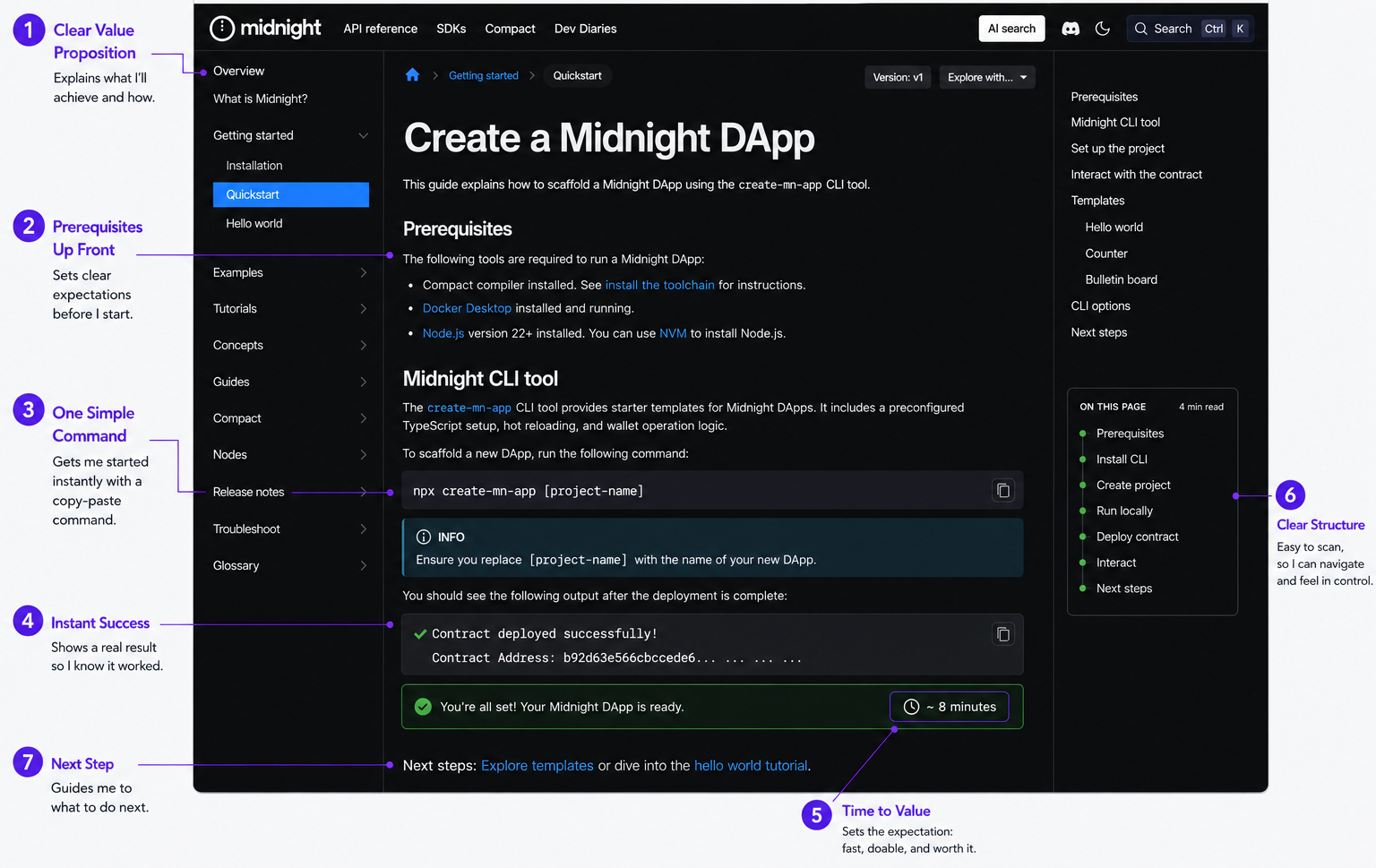
Practical markers of documentation that functions as marketing: the quickstart produces a working result in under 10 minutes, error messages link to specific troubleshooting sections, and the reference section includes real-world examples alongside parameter definitions.
Documentation written by practitioners who understand where developers get stuck reduces support load as well as drawing in new users. Documentation quality drives both acquisition and retention. For an example, see how we helped Midnight Network stabilize its documentation.
YouTube walkthroughs
A tutorial video ranks in search results, stays discoverable for years, and reaches developers who learn through video. Video titles, descriptions, and transcripts are indexed by AI models, which means YouTube content now functions as an AI citation source as well.
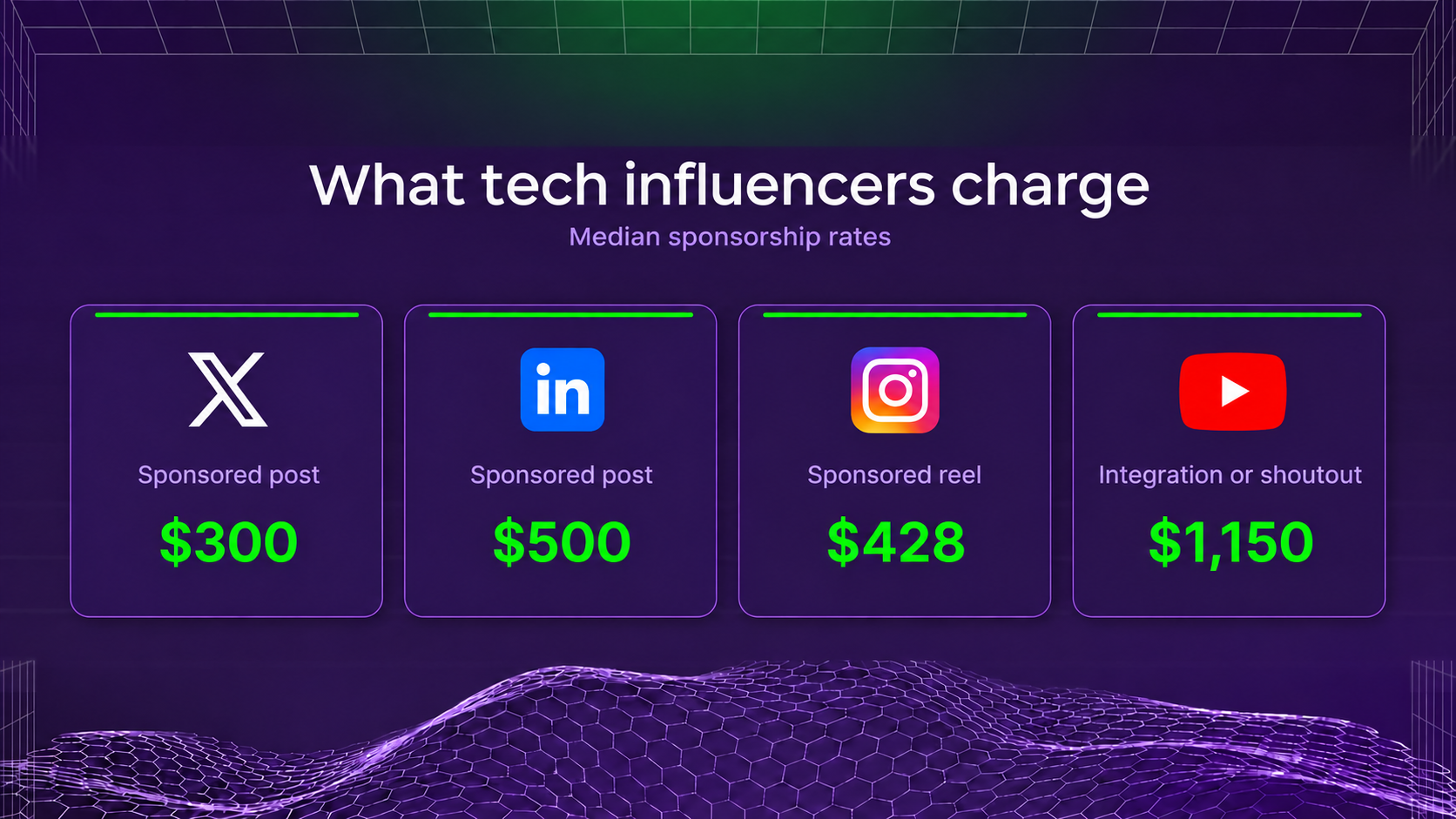
Two approaches work. Produce the video in-house with a practitioner who is comfortable on camera. Or get a credible creator in your technical space, be it a tech YouTuber, a tech influencer on LinkedIn, a tech influencer on X, or a tech influencer on Instagram, to cover your tool. A review or tutorial from someone like Fireship, Theo Browne, or a domain-specific creator in your technical area reaches that audience with the credibility of a peer recommendation.
Changelogs done right
Supabase turned their changelog into a cultural event. Launch Week is a week of daily announcements designed to generate community participation and press coverage. It has become a calendar event in the Postgres and open-source developer communities.
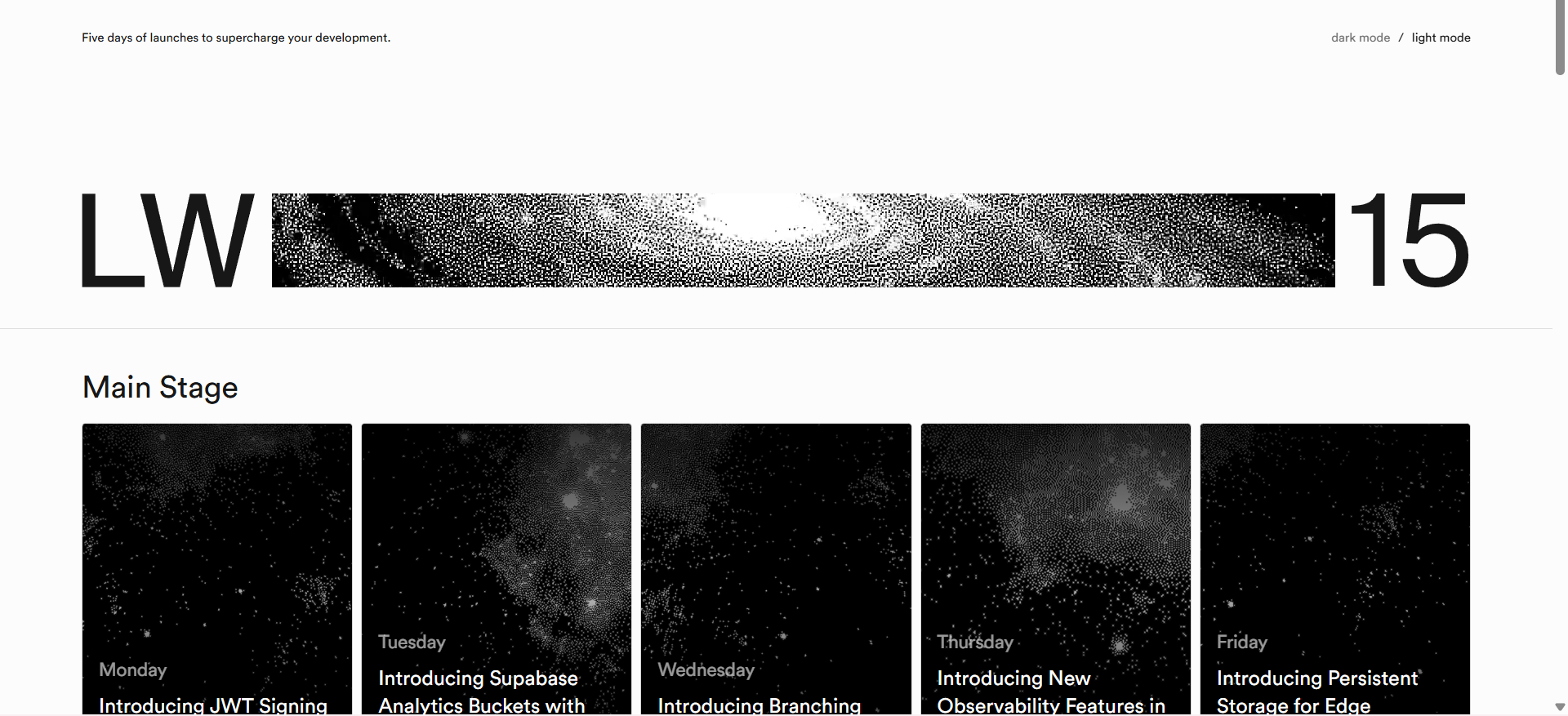
The approach works at smaller scale. A changelog that explains why a change was made, not just what changed, gives developers context they can use. A release note that links to the migration guide for a breaking change, with an example showing exactly what to update, is content that earns developer goodwill and reduces support volume.
Comparison and alternative pages
Developers searching comparison queries are evaluating. "Kafka vs RabbitMQ for event streaming," "Vercel vs Netlify for Next.js," "Postgres vs MySQL for time-series data." These searches signal intent that is hard to find in top-of-funnel content.
Comparison content that works is honest about trade-offs. If your tool handles high-write workloads well but adds latency at query time compared to an alternative, say so. Developers will find out when they test it. Writing about it first builds trust.
Open-source repositories and READMEs
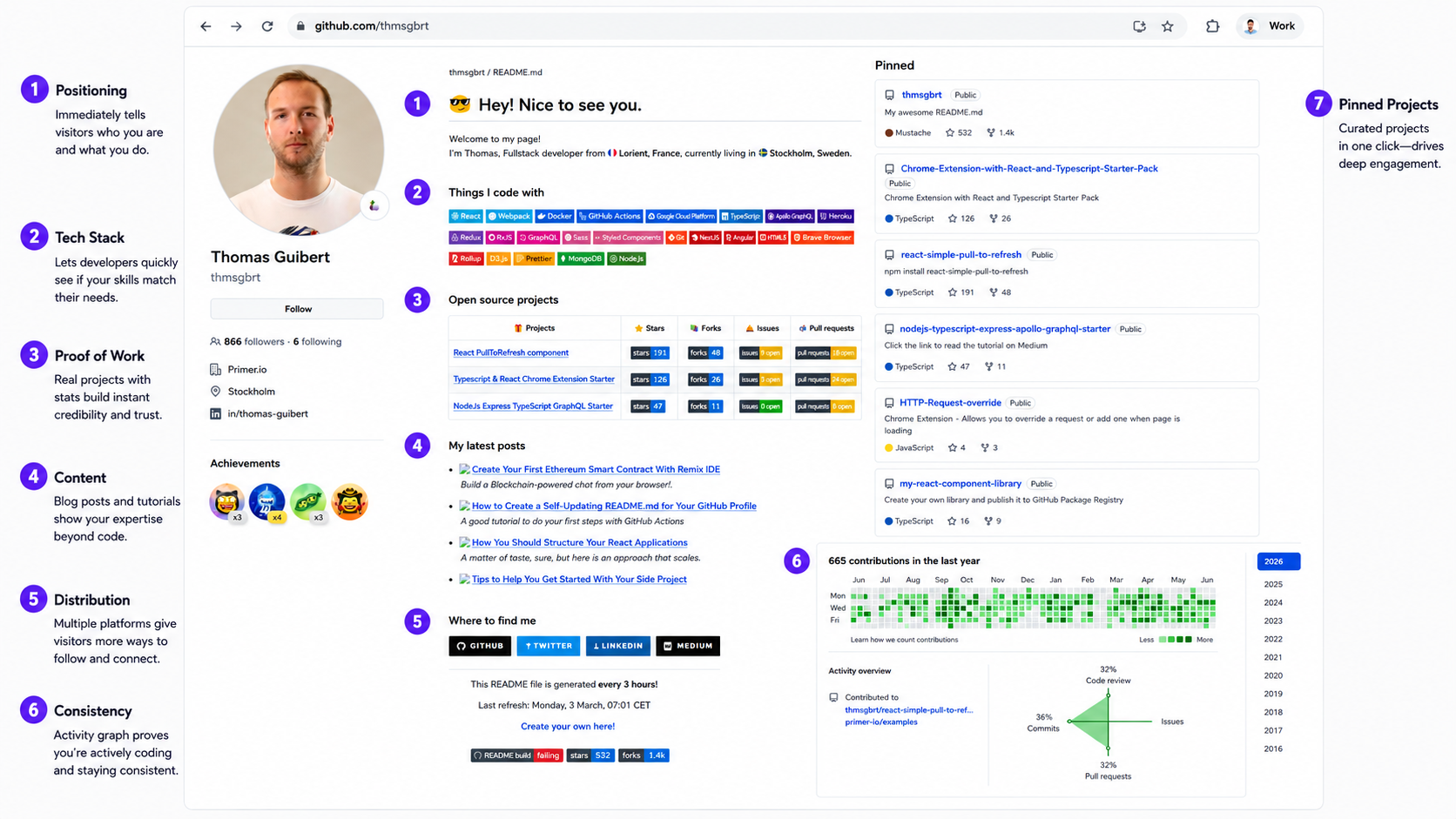
A well-structured README functions as a landing page. Clean code examples in a public repository give developers something to clone and build from. The README is often the first piece of content a developer reads after hearing about a tool. It should answer: what does this do, what problem does it solve, how do I get started in five minutes, and where do I go when I have questions.
How to build a developer content strategy
A content strategy for developer tools is a map from the developer's current problem to your product as the solution, across every stage of their decision process.
Step 1: Define the specific developer you are writing for
Not "developers." The developer who is building a Kubernetes-based deployment pipeline at a 50-person startup and is evaluating secret management tools. The more specific the audience definition, the more useful the content. Vague audience definitions produce content that nobody finds particularly relevant. I cover how to create audience personas using the jobs to be done framework in this guide.
Step 2: Map content to funnel stage
Awareness: developers are not yet looking for your category. Content here solves problems adjacent to your tool: tutorials on the ecosystem, explanations of underlying concepts, comparisons of approaches in your technical area.
Evaluation: developers know the category and are comparing options. Content here is comparison pages, migration guides, integration tutorials with specific tech stacks, and case studies with specific outcomes.
Activation: developers have signed up and need to get to their first successful result. Content here is the quickstart, the tutorial for their specific stack, and the troubleshooting guide for the most common setup errors.
Retention: developers are using the tool and need to go deeper. Content here is advanced tutorials, API reference, and changelogs explaining what is new and why.
Start at the bottom. A developer searching "stripe vs. braintree for subscription billing" is closer to a decision than a developer searching "what is a payment API." Build evaluation and activation content before investing in awareness content.
Step 3: Build topic clusters
A pillar post covers a head keyword thoroughly: "Kubernetes secrets management" or "event streaming for microservices." Spoke posts target related queries that link back to the pillar: "how to rotate Kubernetes secrets without downtime," "AWS Secrets Manager vs Vault for Kubernetes," "Kubernetes secrets best practices 2026."
The cluster builds topical authority. Google's systems and AI search engines both treat a cluster as a signal that a site has deep, trustworthy coverage of a topic.
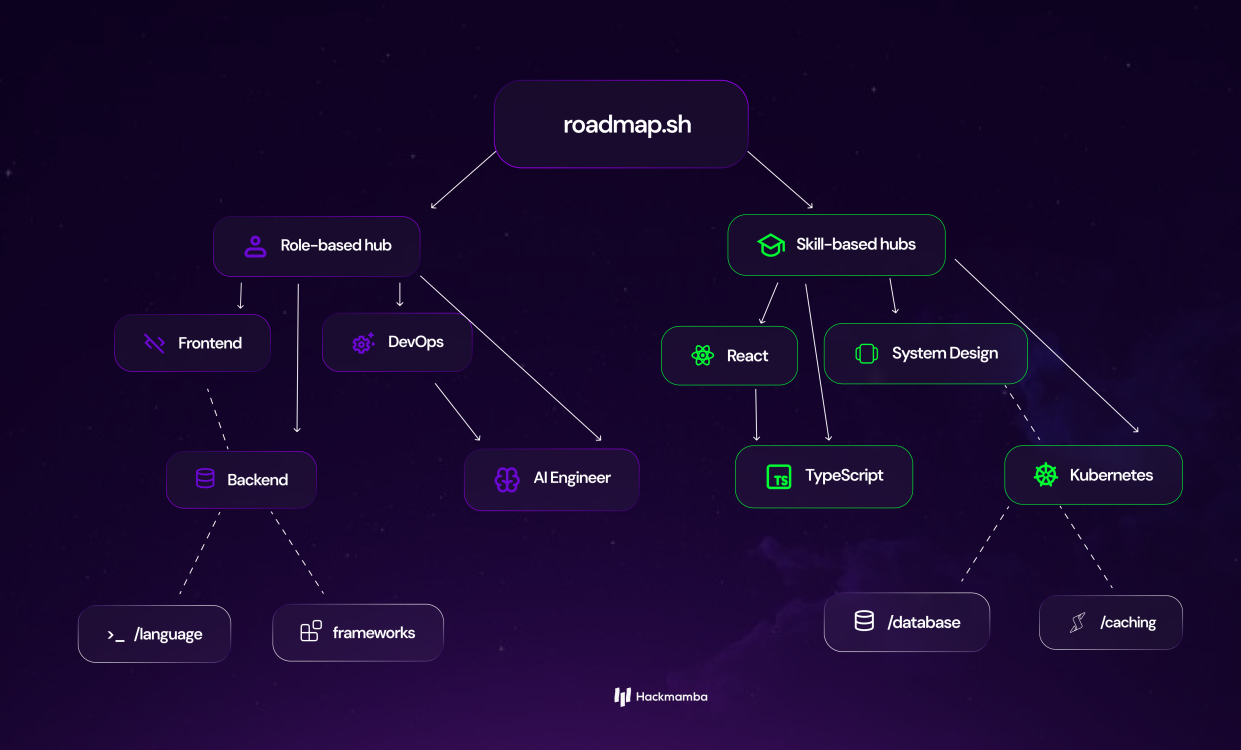
A good reference point is the clustering work we did for Roadmap, which grew from 197K to 470K monthly visits over 24 months. Instead of creating isolated pieces of content, Roadmap organized its content around two core clusters: role-based roadmaps such as Frontend, Backend, DevOps, AI Engineer, and Game Developer, and skill-based roadmaps such as React, TypeScript, Node.js, System Design, and Kubernetes.
This structure allowed them to capture developers at different stages of their journey while building topical authority around both careers and technologies. The same principle applies to developer tools. Once you identify recurring pain points, group them into logical clusters so that every piece of content contributes to a larger expertise hub rather than existing as a standalone asset.
For how we build the hub and spoke architecture and internal links behind a cluster, see Step 4 of our SEO, GEO, and AEO process.
Step 4: Set cadence by what you can sustain at quality
One technically accurate tutorial per week is more valuable than five pieces of thin content per week. Publishing velocity that forces you to drop the practitioner review to meet a deadline is the wrong trade. Quality is the strategy. Everything else is execution.
Step 5: Run two tracks simultaneously
Search-driven content targets specific queries where developers are actively looking for answers (if you operate in an existing category). Community content is built to circulate: tutorials shared in Discord, breakdowns posted to LinkedIn, YouTube videos developers bookmark and return to, Reddit answers that become the go-to reference for a question your tool solves.
Both tracks require the same standard: technically accurate, written by a practitioner who has built with the technology, tested so every code example works, and honest about edge cases and failure modes.
Step 6: Maintain an editorial backlog
Keep a queue of 20 to 30 topic ideas with priority scores based on search volume, buyer intent, and topical gap. This prevents reactive topic selection and keeps the program moving even when the team is deep in production on current pieces.
Step 7: Distribution
Distribution is one of the most underrated parts of a developer content program, and of B2D marketing as a whole. Developers spend time in communities and trust recommendations that come from genuine participation in those communities. The channels that reach them require showing up consistently, adding value first, and letting the content earn its audience.
Most devtool content programs treat distribution as an afterthought: publish the post, share it on LinkedIn, move on. The post gets seen by people who already follow the company, which rarely reaches the developer who has not yet heard of it.
At Hackmamba, distribution is included on every post we publish, across Reddit, Hacker News, DEV.to, Hashnode, LinkedIn, our developer Discord, and newsletters. The full breakdown of how we approach search-based distribution for devtools is in how we do SEO for developer tools.
The highest-trust channel for developer word-of-mouth and the most cited domain across AI search engines. Peec AI's analysis of 30 million sources found that Reddit ranks first across ChatGPT, Google AI Overviews, Gemini, and Perplexity combined for AI citations. A developer advocate seeding a thread in r/devops is a community play and an AI citation strategy simultaneously.
The right approach is genuine participation in the subreddits where your target developers ask questions your content answers: r/devops, r/kubernetes, r/programming, r/webdev, r/MachineLearning, and category-specific communities. What that looks like day to day (and where it fails) is in our notes on reddit for devtools.
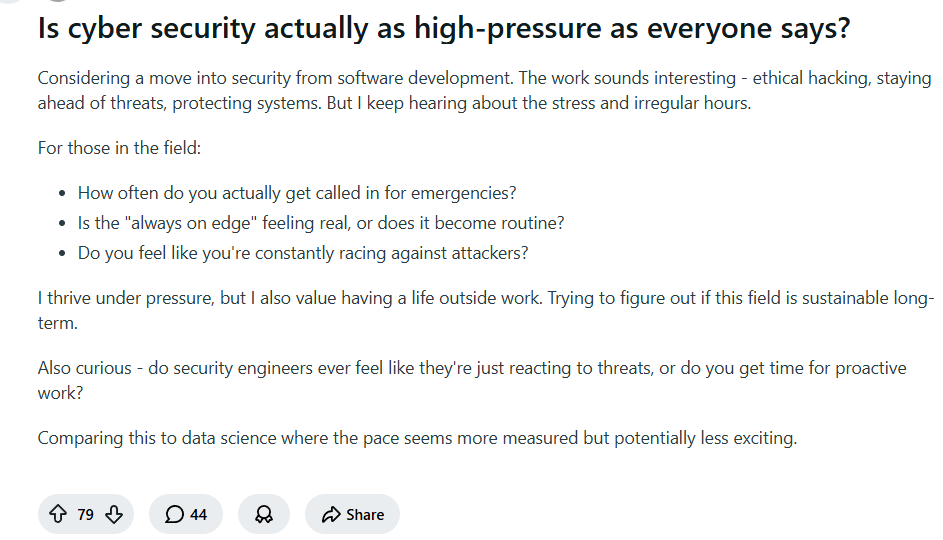
Here is an example of a thread we seeded into an active discussion on r/CyberSecurityJobs:
YouTube
YouTube remains one of the strongest distribution channels for developer tools because developers actively use it to learn new technologies, evaluate tools, and solve implementation problems. A well-made tutorial, technical walkthrough, benchmark analysis, or conference talk can continue generating visibility for years after publication.
AI platforms increasingly rely on YouTube because every video comes with rich metadata, transcripts, chapters, descriptions, and engagement signals. Views alone are not what matter. What matters is getting credible YouTube creators and developer advocates to talk about your product in the right technical context. A single tutorial that demonstrates a use case often creates more long-term value than thousands of passive views.
LinkedIn works best when you share the insight, not the article. If you published a benchmark report, share the most surprising finding. If you published a tutorial, share the implementation mistake developers make most often. If you published a migration guide, share the biggest lesson learned from the migration.
The goal is to start a conversation around the problem rather than promote the content itself. Developer advocates, engineers, and founders regularly engage with technical content on LinkedIn, making it a strong distribution channel for developer tools. LinkedIn Groups can also work surprisingly well when the content is relevant to the community and contributes to an ongoing discussion.
When we're shortlisting who to follow or partner with there, we keep a running list of tech influencers on LinkedIn.
Discord
Where real-time developer conversations happen. Participate by adding value first. Link when the piece is genuinely the best resource for the specific question being asked.
You can try some of these discord communities for starters:
| Community | Best For |
|---|---|
| Reactiflux | React, Next.js, React Native, TypeScript |
| Python Discord | Python, AI/ML, automation, backend development |
| Devcord | JavaScript, CSS, HTML, frontend development |
| The Coding Den | Full-stack development, career discussions, programming help |
| Programmer's Hangout | General software engineering, code reviews, project feedback |
| CodeSupport | Technical troubleshooting and programming support |
| Rust Community | Rust programming and systems engineering |
| SpeakJS | JavaScript and TypeScript developers |
| TensorFlow | Machine Learning and AI engineering |
| cscareers.dev | Software engineering careers, internships, hiring discussions |
Hacker News
The hardest developer community to reach and the most valuable when it works. Front-page traction reaches a concentrated group of technical decision-makers and early adopters. Original research, a genuine technical insight, or a Show HN post for something developers have not seen before are the entry points that work.
DEV.to and Hashnode
Both are developer-native publishing platforms that get indexed fast. Republish tutorials there with a canonical tag pointing to the original post, so the copy reaches each platform's audience without competing with your own page in search. Write the opening for that audience rather than pasting the original intro.
Developer newsletter sponsorships
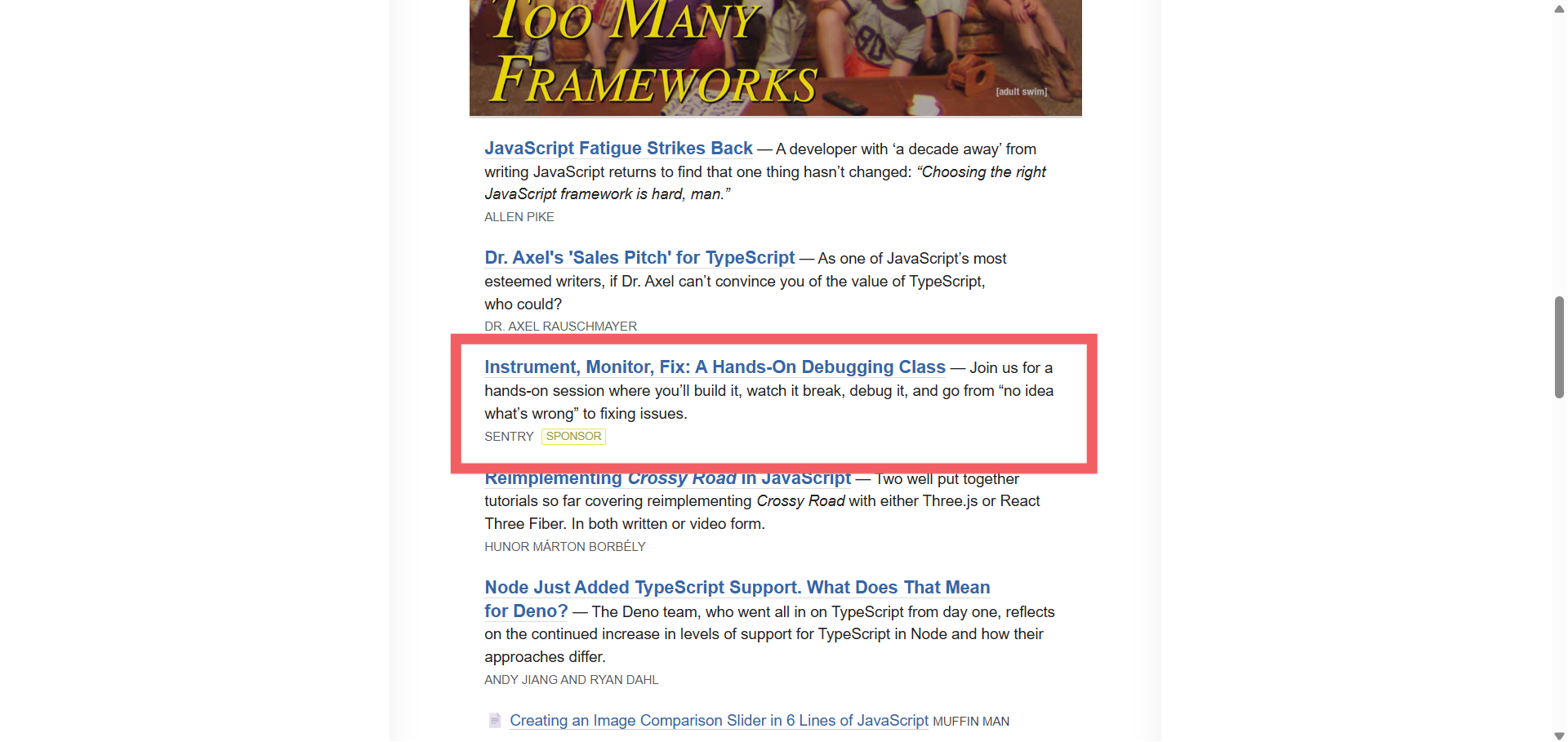
TLDR, JavaScript Weekly, Pointer, and category-specific publications reach developers who have opted into staying current on tools in their space. These are amplification channels that work once the content foundation is strong.
Creator partnerships
A creator partnership helps place your product in front of developers who are already looking for solutions. Tutorials, reviews, benchmarks, and implementation walkthroughs give your product visibility in the exact context where developers evaluate tools.
These partnerships also generate valuable web mentions. If you want your observability platform associated with debugging Kubernetes latency, you need creators publishing content about your product while solving that problem. The closer the content matches the use case you want to be known for, the stronger the association becomes across search engines, AI platforms, and developer communities.
For the channel-by-channel breakdown with examples, KPIs, and sequencing by growth stage, read the complete guide on developer marketing channels.
Step 8: Refresh what you've published
Technical content goes stale faster than most content. Product versions ship, prices change, endpoints get renamed, and the code that ran six months ago starts throwing errors. Put every high-value page on a review cycle: re-run the code, re-check product facts against the current docs, and update screenshots and examples. Start with the pages that are losing clicks or have stopped showing up in AI answers for their queries. Only change the updated date when the content changes. Our full refresh and GEO re-optimization process is in Step 10 of our SEO process.
The team you need
First hire: a technical writer who is also a developer
The hire that changes a technical content program is a technical writer who can run every code example they write, hit the edge cases, and write the sections about what breaks without asking an engineer to review those parts.
The standard is specific: can this person write a tutorial about your product without engineering support? A technical writer who meets that bar produces content developers trust. That is the foundation of a technical content program.
The technical writer is also the person who catches inaccuracies in content produced by others before those inaccuracies reach a developer who tries to follow the instructions and hits a wall. One published tutorial with a broken code example does more damage to a developer audience than ten unpublished tutorials would have done.
For the full breakdown of how to hire and structure this function, read how and where to hire a technical writer.
Second role: developer advocate
A developer advocate distributes content through the communities where developers spend time, participating as a practitioner in those communities. They are in r/devops or the TypeScript Discord because those communities are genuinely part of their professional life.
A developer advocate commenting in a r/devops thread about why a specific approach to Kubernetes network policies falls apart at scale, then linking to a tutorial that shows a better approach, earns upvotes and sends real traffic to the piece. That kind of distribution requires genuine community presence and technical credibility.
Developer advocates also surface content ideas that keyword research cannot produce. The tutorial ideas that come from a developer advocate who spent an hour in Discord answering questions about your authentication library are more valuable than any keyword research output.
Team structure at each stage
Founder-led (0 to 2 people in marketing): The founder writes the first tutorials. Ship four to six practitioner-level tutorials before hiring anyone. This establishes the quality bar and tests whether the content produces signups before you invest in building a team.
First two hires: Technical writer first, then developer advocate (or outsourced DevRel if you cannot hire one yet). This sequence gives you content before distribution, which is the right order.
Scaling (4 or more people in content): Add a content strategist to own keyword research, cluster architecture, and performance tracking. Add a video producer if YouTube is a meaningful channel. Add a second technical writer before adding another advocate. If you need that strategy ownership before you can justify a full-time strategist, a fractional head of content is the stage-appropriate hire.
How to measure whether it is working
Tie each metric to a specific funnel stage rather than tracking everything at once.
Awareness tells you whether the right people are finding the content. Acquisition tells you whether they are signing up. Activation tells you whether they are getting to a first working result with the product. Retention tells you whether they are coming back. Revenue tells you whether content is contributing to trial-to-paid conversion.
Content that performs on awareness but produces no activation almost always signals audience fit or missing next steps, not content quality.
Search-driven content metrics
| Metric | What it tells you | Tool |
|---|---|---|
| Keyword rankings | Whether your content is reaching the audience it was built for | Ahrefs, Semrush, Google Search Console |
| Organic impressions and clicks | Search visibility and CTR by query | Google Search Console |
| Organic conversion rate | Whether search traffic is taking meaningful action | Google Analytics 4 |
| Trial signups from organic | Direct revenue attribution from search | GA4 with UTM tracking |
| AI citation share | How often your content appears in AI-generated answers for target queries | An AI visibility tracker (we use Frodo, which covers ChatGPT, Claude, Gemini, Perplexity, and Google AI Overviews) or manual checks |
Community content metrics
| Metric | What it tells you | Tool |
|---|---|---|
| Referral traffic by source | Which channels are sending qualified readers | GA4 source/medium reports |
| AI referral sessions | Traffic from ChatGPT, Perplexity, Claude, Gemini, Copilot | GA4 channel grouping for AI referrers |
| Referral conversion rate | Whether each channel's audience converts | GA4 goals by source |
| GitHub referral traffic | Whether content is linked from repositories and READMEs | GA4 referral report |
| Community engagement | Upvotes, thread replies, shares in developer communities | Native platform analytics |
| First API call from content-sourced session | Activation signal: content is producing active users | Product analytics |
Program-level metrics
| Metric | What it tells you |
|---|---|
| Inbound lead volume from content | Overall contribution to pipeline |
| Sales cycle length for content-touched prospects | Whether content is doing pre-qualification work |
| Trial-to-paid conversion rate by acquisition source | Quality of audience content is bringing in |
| AI citation share across target queries | Whether content appears in the AI answers developers see first |
ROI formula: (total revenue attributed to content minus total content costs) divided by total content costs, multiplied by 100.
GA4 can group visits from AI assistants into their own channel, but check your own setup. Some sources still land in Referral, and Google AI Overviews clicks count as Organic Search. For full coverage, add a custom channel group with regex filters for perplexity.ai and any other AI sources missing from your reports.
Here is what AI referral tracking showed at OpenRouter. Before our articles started publishing, AI assistants sent its blog about 165 visits a month. That reached 2,391 in July and 3,725 in August. Between June 20 and September 19, 40 articles received 6,025 AI-assistant visits, 4,457 of them from ChatGPT. How we report this for clients is covered in Step 12 of our SEO process.
For the full measurement framework, read content distribution analytics: how to measure what is actually working. For a funnel-mapped view of which developer marketing metrics to track at each stage, read the developer marketing metrics you should track.
AI search is changing the distribution picture faster than most teams realize
Developers now ask AI assistants which tool to use before they open Google, and that traffic shows up in analytics, as the OpenRouter numbers above show. The companies AI engines recommend most often got there through years of content, opinions, and open-source work that those engines learned from and now retrieve.
ChatGPT and Perplexity often cite different sources for the same question. Optimizing for one engine teaches you little about the others. What works across all of them is the same thing that has always worked in developer content: be specific, demonstrate real experience, and show up consistently in the places developers trust.
In practice, if you want AI to recommend your database tool for "high-write workloads on Kubernetes," you need multiple independent sources talking about your product in that specific context. In our experience, a generic brand mention does little, and a few credible domains citing you for the right use case do more than dozens of passing references. Own a narrow use case clearly before trying to be recommended for everything.
Henry Bassey covers the tactical layer of this in the practical guide to AI search optimization for technical content. For how we track citations engine by engine, see Step 9 of our SEO process.
Where to start if you are building this from scratch
Hire a technical writer before you hire another content marketer. This is the most important allocation decision in the first stage of a technical content program. A technical writer who can run the code, hit the edge cases, and write the section about what breaks is the person who produces content developers actually trust.
Pick one query your target developer is already searching for or asking in a community. Write the most accurate, complete answer to that question. Have a practitioner validate every code example. Distribute it through two channels where that developer spends time. Track whether it produces signups, activations, or community engagement. That is the first content motion. It tells you whether the audience and the topic are right before you invest in building the broader program.
If you need a partner to build this program, we can help. Hackmamba is a full-stack developer marketing agency, and our technical content marketing agency team helps developer tool companies create technical content, documentation, and distribution systems that drive product adoption. From audience research and content strategy to technical writing, developer advocacy, and content distribution, we help devtools turn internal expertise into a repeatable growth engine. We meet weekly, report monthly, share raw analytics exports, and everything we write for you, including code, belongs to you.
With a creator community of 2,000+ technical writers, video creators, developer advocates, specialist marketers, and engineers, and experience working with companies such as OpenRouter, Roadmap, Cloudinary, Actian, and Endform, we understand what it takes to reach developers, earn their trust, and turn them into product champions. Book a call today to get a free content strategy personalized to your product.
FAQ
Technical content marketing is the practice of creating and distributing content that helps developers understand, evaluate, use, and advocate for your tool, across every channel where they spend time. It includes tutorials, implementation guides, documentation, open-source repositories, YouTube walkthroughs, comparison pages, changelogs, and community participation. Search is one distribution channel within the discipline, not the whole of it.
AI can speed up research and first drafts, but a practitioner has to verify every product claim against live documentation and run the code before anything is published. When we reviewed AI agent drafts for OpenRouter, they had outdated user numbers, a pricing markup the company no longer charged, and the wrong SOC 2 status.
Track at the funnel stage level, not just traffic. For search-driven content, track rankings, impressions, clicks, and conversions from organic visitors. For community content, track referral traffic by source, AI referral sessions, and activation signals such as a first API call. At the program level, track content-sourced pipeline and AI citation share across ChatGPT, Claude, Gemini, Perplexity, and Google AI Overviews.
Developers increasingly ask AI tools about devtool options before they search Google, so content needs to be citable across AI engines, not just rankable on Google. The way to become citable is the same way you become trusted in developer communities: demonstrate specific technical experience and show up in multiple credible places in the right context.
Put high-value pages on a regular review cycle. Re-run the code, re-check product facts against current documentation, and update examples. Start with pages that are losing clicks or no longer appear in AI answers for their queries, and only change the updated date when the content changes.
About author
From SEO and growth campaigns to documentation, landing pages, and developer-focused content, the list goes on! My passion lies in helping products connect with developers and driving measurable results through thoughtful marketing. Outside of work, you’ll find me chasing new adventures, gazing at the moon, and enjoying the timeless charm of old Hollywood movies.