



How to create developer video content? I ran a survey
I ran a survey to learn what makes good developer video content. Here are the insights and a checklist you can use.

There is long-running confusion about what makes good video content for developers. Most teams operate on intuition, assumptions, or marketing habits, and very few ground their decisions in what developers say they want. I decided to talk to developers instead.
I ran a 15-question survey covering motivation, preferred length, pacing, narration style, supporting material, and discovery patterns. Here’s a sample of the questionnaire.
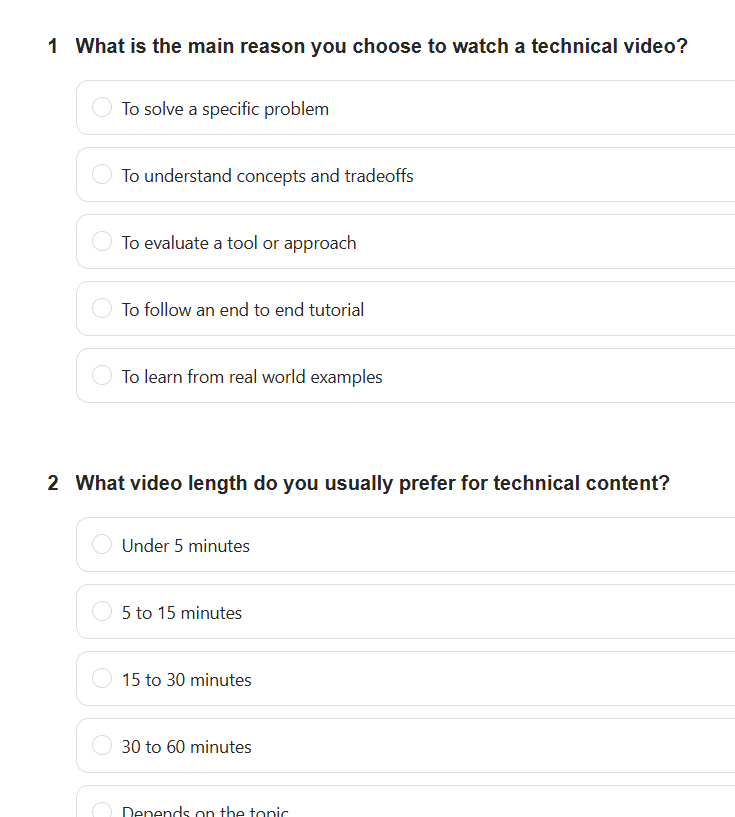
We shared the survey with close to 300 developers across our community, past agency contacts, and developer channels supported by our advocate. 101 developers responded across backend, frontend, data, and DevOps roles, from mid-sized engineering teams to larger organizations. Here’s the summary of the responses.
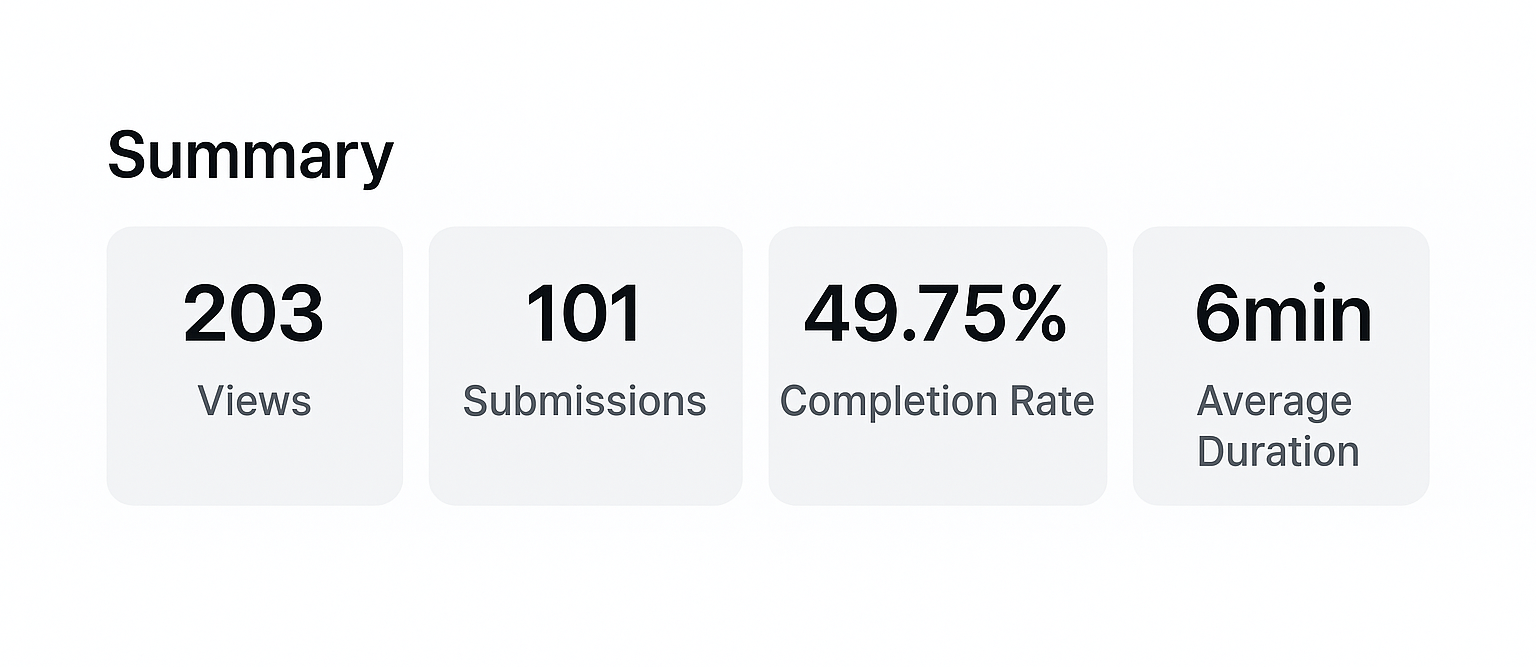
This guide is built on what they shared. It shows what developers look for, what they ignore, what they find frustrating, and what makes a video useful enough to share. Some of the responses challenged common assumptions, while others confirmed patterns many creators only guess at. If you want the short version, there is a complete technical video checklist at the end. But if you want the reasoning behind each point, keep reading.
TLDR: What developers want from technical videos
- Developers watch videos mainly to understand concepts (44%) and solve specific problems (31%).
- 15 to 30 minutes is the ideal length for most technical videos.
- Architecture breakdowns and live coding are the most valued formats.
- The preferred pacing is a mix of quick, simple parts and slower, complex parts.
- Developers trust creators who provide reproducible examples and explain things honestly.
- A complete GitHub repo is the most important supporting material.
- YouTube is the only place developers discover technical videos.
- Developers share videos that teach clearly and solve meaningful problems.
- Frustrations come from marketing-heavy content, missing code, and unclear context.
1. Why developers watch technical videos
This was the first question in the survey and it sets the tone for everything that follows. The responses show a clear pattern. Developers watch technical videos to understand concepts properly and to unblock themselves when documentation or tutorials fall short.
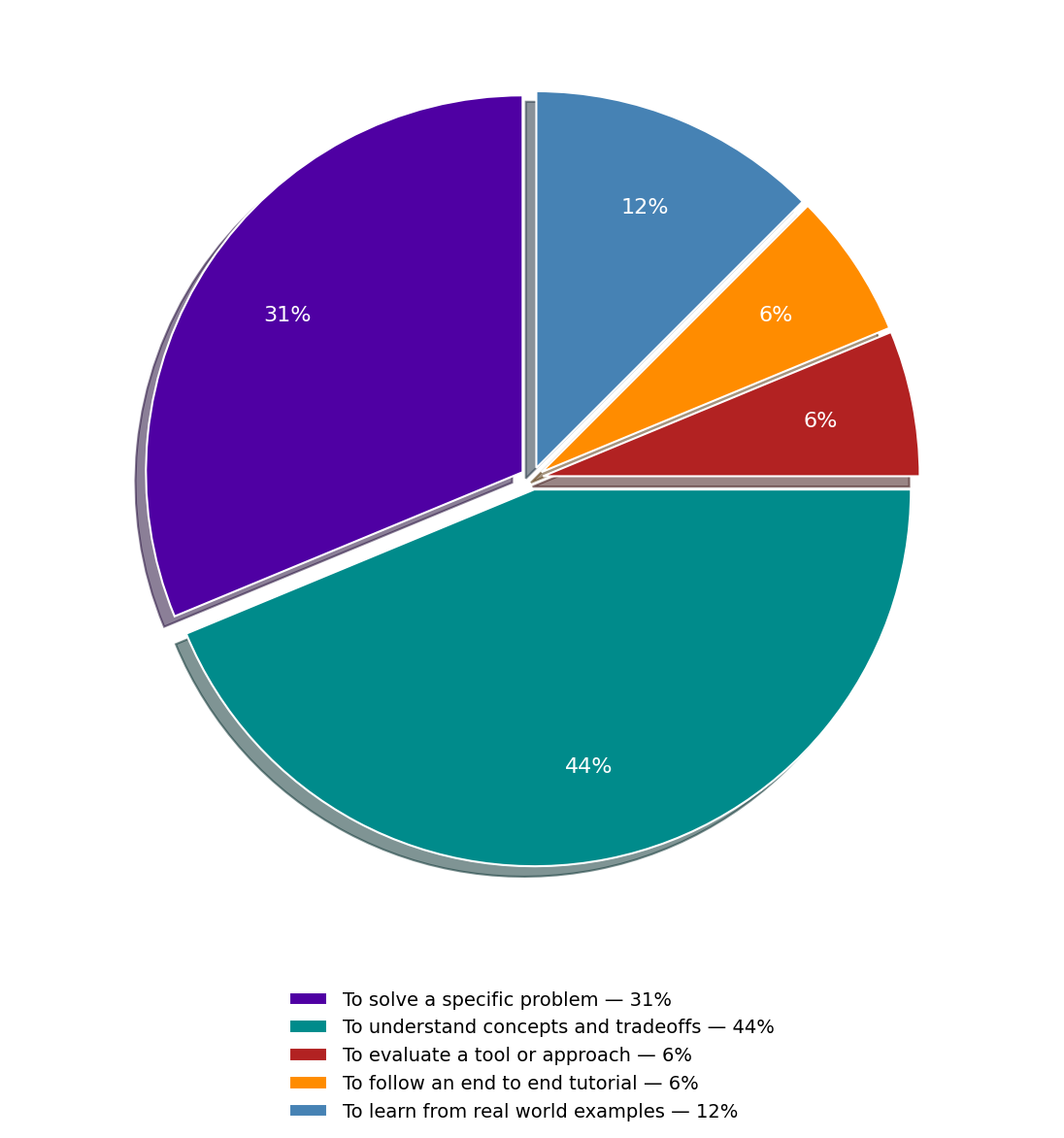
The biggest group, 44 percent, watches videos to get a deeper understanding. They want explanations that show the why behind a decision, the tradeoffs and the mental model that sits under the code. Developers want to understand the thinking, not just follow the steps. Videos that only demonstrate a sequence of actions without framing the reasoning lose this group quickly.
The next largest group, 31 percent, turns to video when they are stuck. These are debugging moments, integration issues, configuration gaps or performance problems where text is either too slow or too incomplete. A clear walkthrough that lays out the flow step by step removes uncertainty and saves time.
One interesting oddity stood out. Developers often say they prefer short content, yet when the goal is to understand or fix something, they consistently choose videos that slow down enough to explain the idea properly.
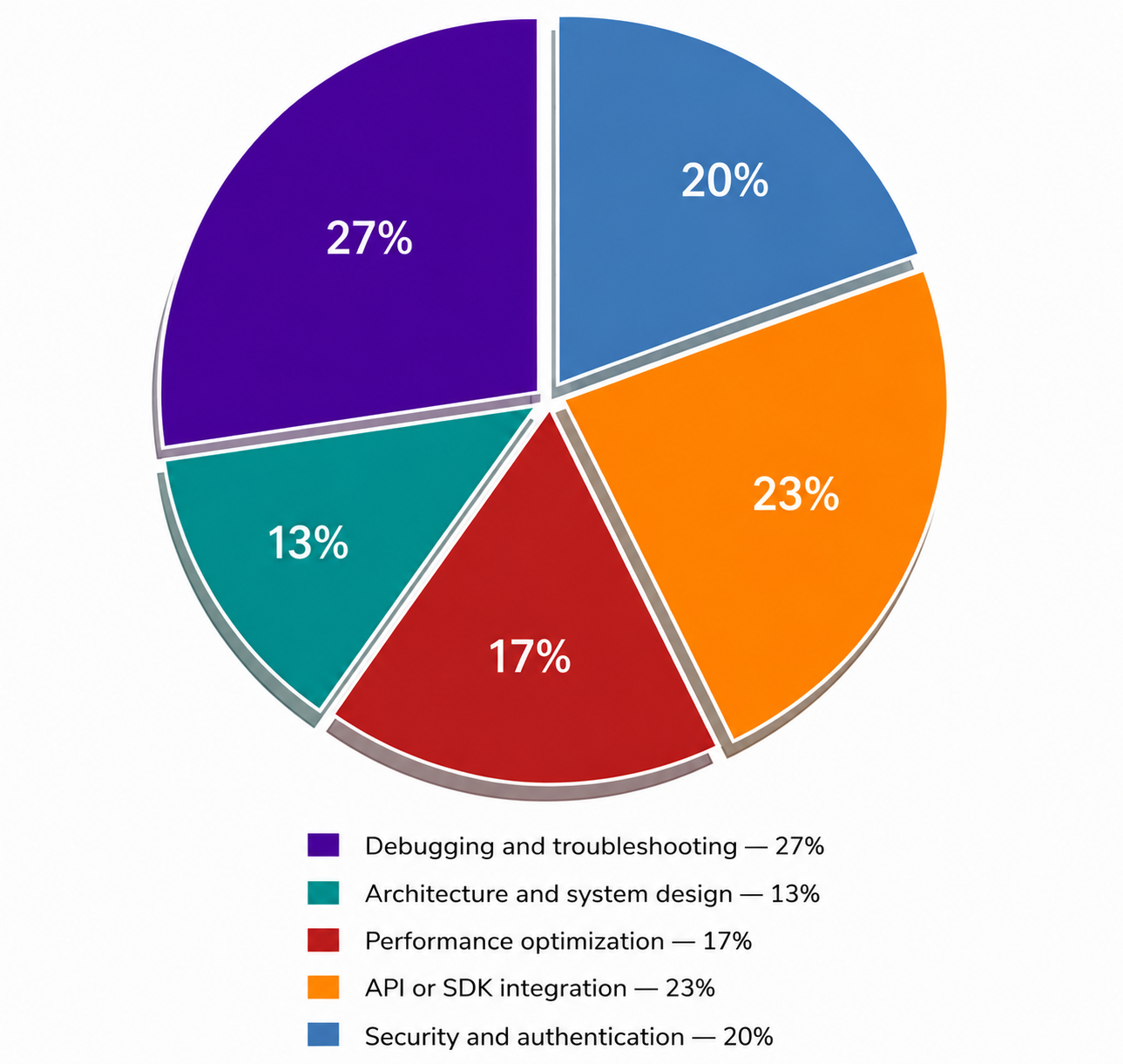
When I compared this with the question about which problem areas are most useful in video format, the alignment was very clear. Developers want videos for troubleshooting, integrations, CI and infra workflows, performance issues and architecture. These are parts of engineering work where static documentation can feel limiting. A video that walks through the setup, the context and the decisions makes these topics easier to follow.
The bottom line
Make videos that show the full reasoning and the steps that matter. When developers understand the thinking and can follow the flow without missing pieces, the video earns trust. If the explanation skips context or jumps straight to the final answer, the content feels shallow and developers stop watching
2. What developers find most frustrating in technical videos
Before getting into what developers prefer, it is important to understand what makes them tune out in the first place. This sets the constraints for every decision a creator makes. If a video breaks these expectations, developers stop watching no matter how useful the idea might be.
How much prior knowledge a video should assume
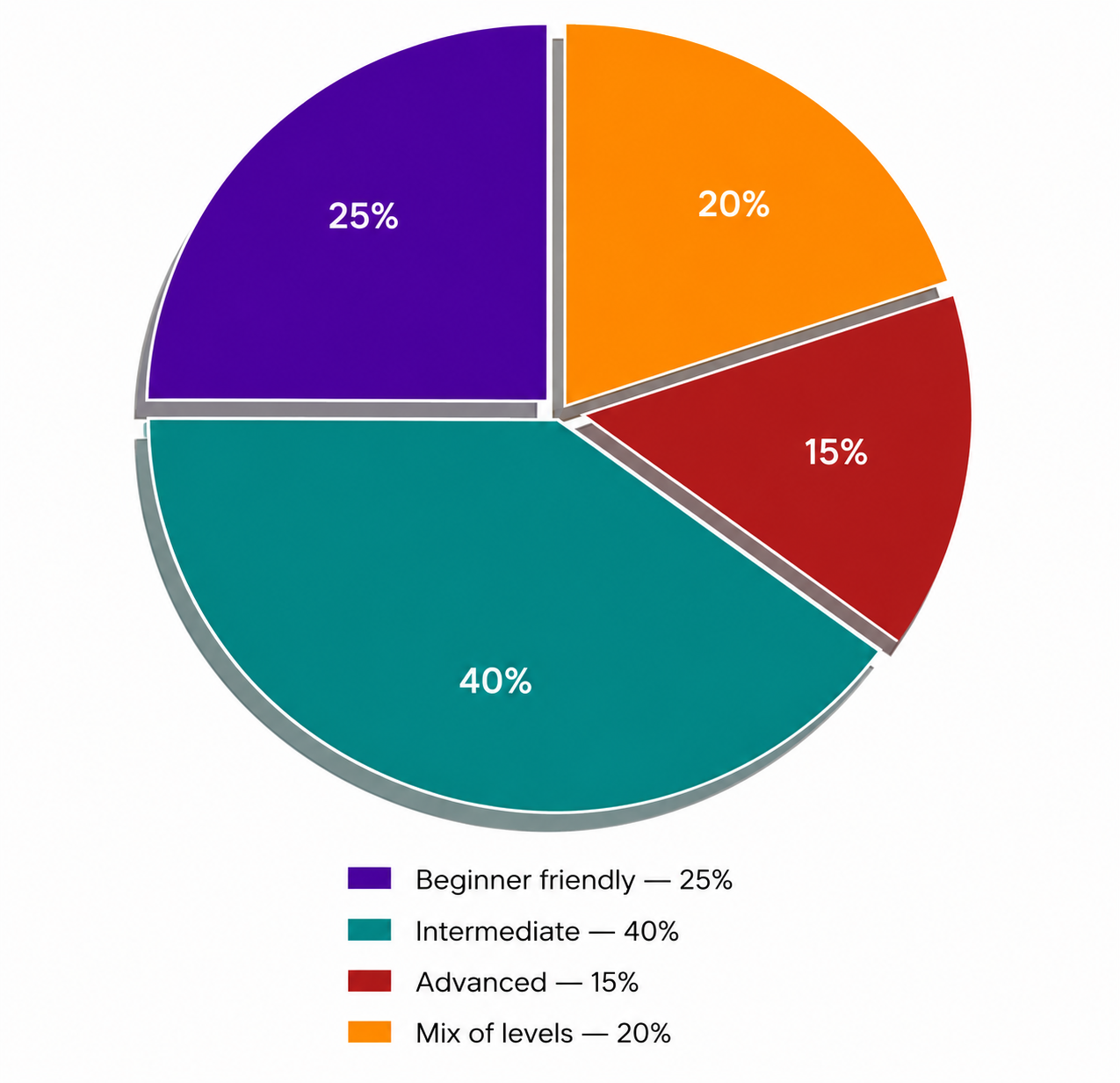
40 percent prefer an intermediate starting point. They want creators to skip the absolute basics and move straight into the substance of the topic.25 percent prefer beginner friendly content if it is structured well.
20 percent prefer a mix of levels, and 15 percent want advanced explanations, especially for infra, performance or deeper system topics.
The pattern is clear. Developers do not want to guess what the creator assumes they already know. They want the starting point to be obvious from the first minute.
What frustrates developers the most
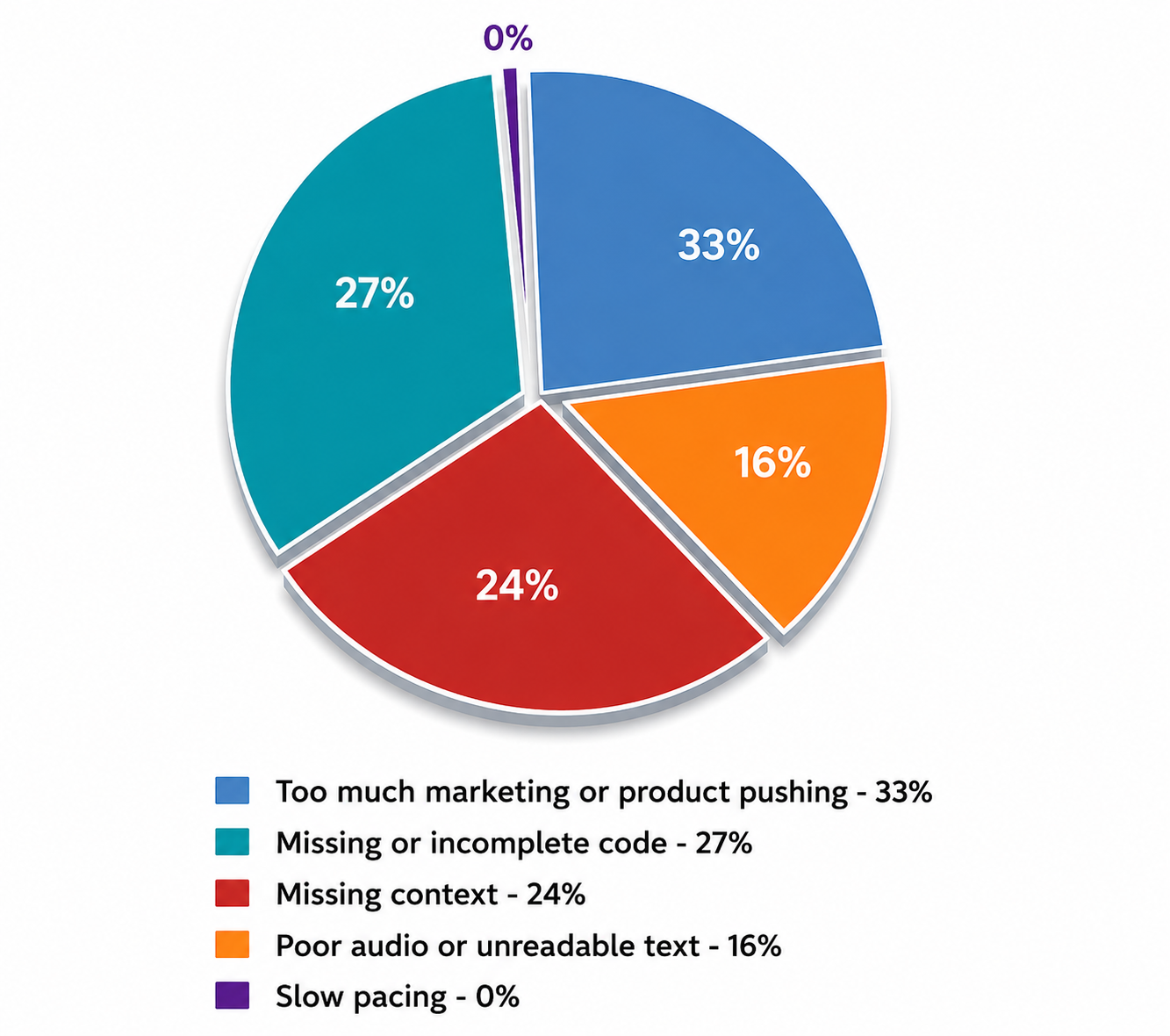
The top frustration, selected by 33 percent, is too much marketing or product pushing. Anything promotional breaks the flow immediately. Developers want the content to stay focused on the topic from start to finish.
The second frustration, 24 percent, is missing or incomplete code. Developers expect code they can run and inspect. When core pieces are skipped or unavailable, the value of the video drops.
24 percent cited missing context, which often happens when the creator jumps straight into the middle of the explanation without clarifying the goal or the setup.
15 percent mentioned poor audio or unreadable text, which makes the experience harder even if the content is good.
One notable oddity stood out. Zero percent were frustrated by slow pacing. Many creators worry about going too slow, but developers are comfortable with slower explanations when the topic demands it.
The bottom line
Developers leave when a video sells, skips or confuses. Start with the right level, avoid anything promotional and provide complete code and context. Without these basics, even strong content fails.
3. The ideal length and video format developers prefer
Once the frustrations became clear, the next question was about what actually works. If developers dislike marketing-heavy videos, missing context and incomplete code, what length and format keep them watching long enough to learn something useful?
How long a technical video should be
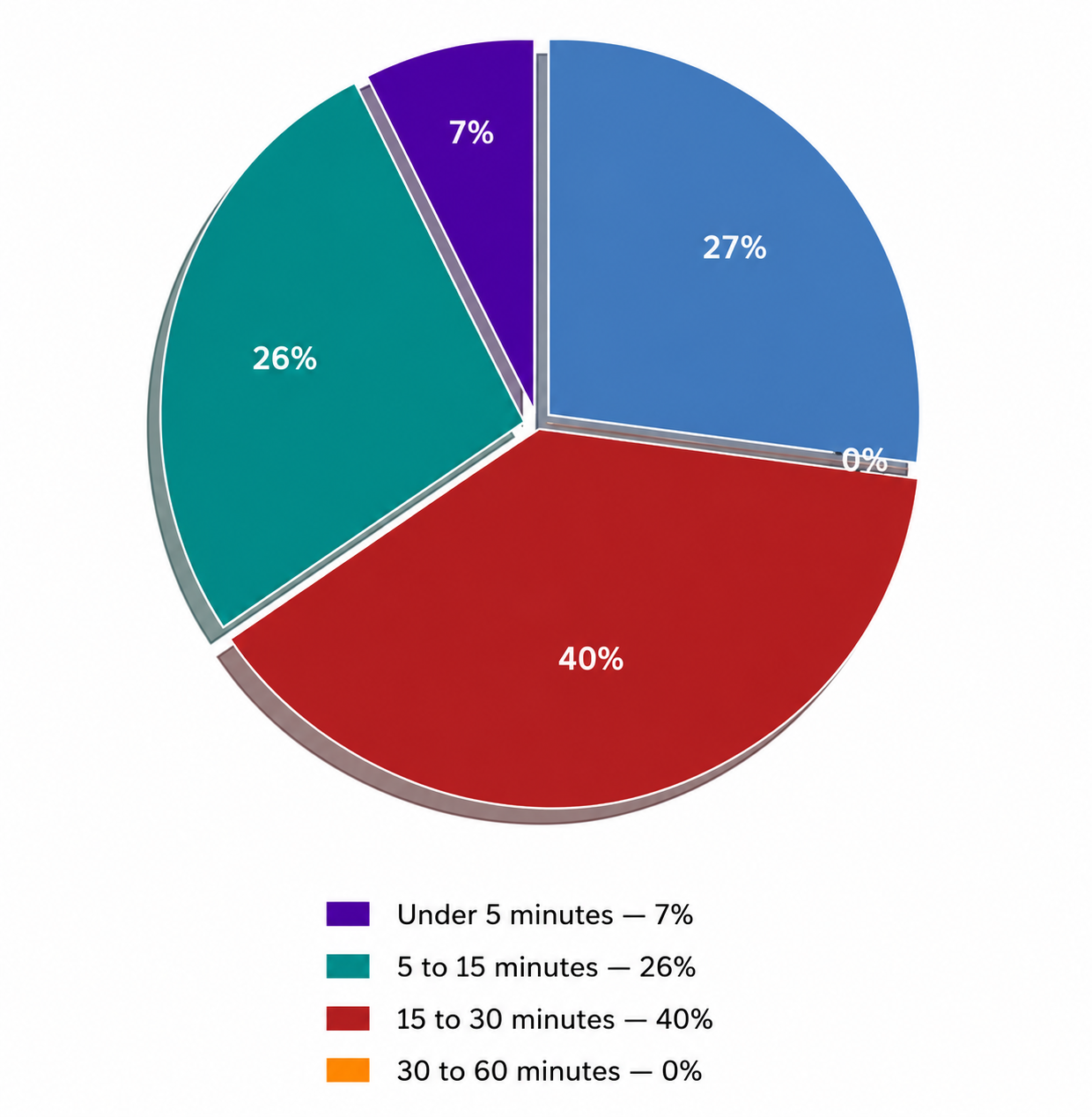
40 percent prefer videos that are 15 to 30 minutes long. This range gives enough room to explain the flow, show the reasoning and walk through the important parts without feeling rushed. Developers see this length as the point where they get real clarity.
Short videos, from under 5 minutes to 15 minutes, only work for simple topics. Anything more complex needs context, setup and explanation. One interesting detail is that nobody chose the 30 to 60 minute range. Once a video crosses the 30 minute mark, it starts to feel like a talk instead of something practical.
A quiet contradiction shows up here. Developers say they prefer short content, but when the goal is to learn something properly, they choose the medium length that allows for full reasoning.
What format developers value most
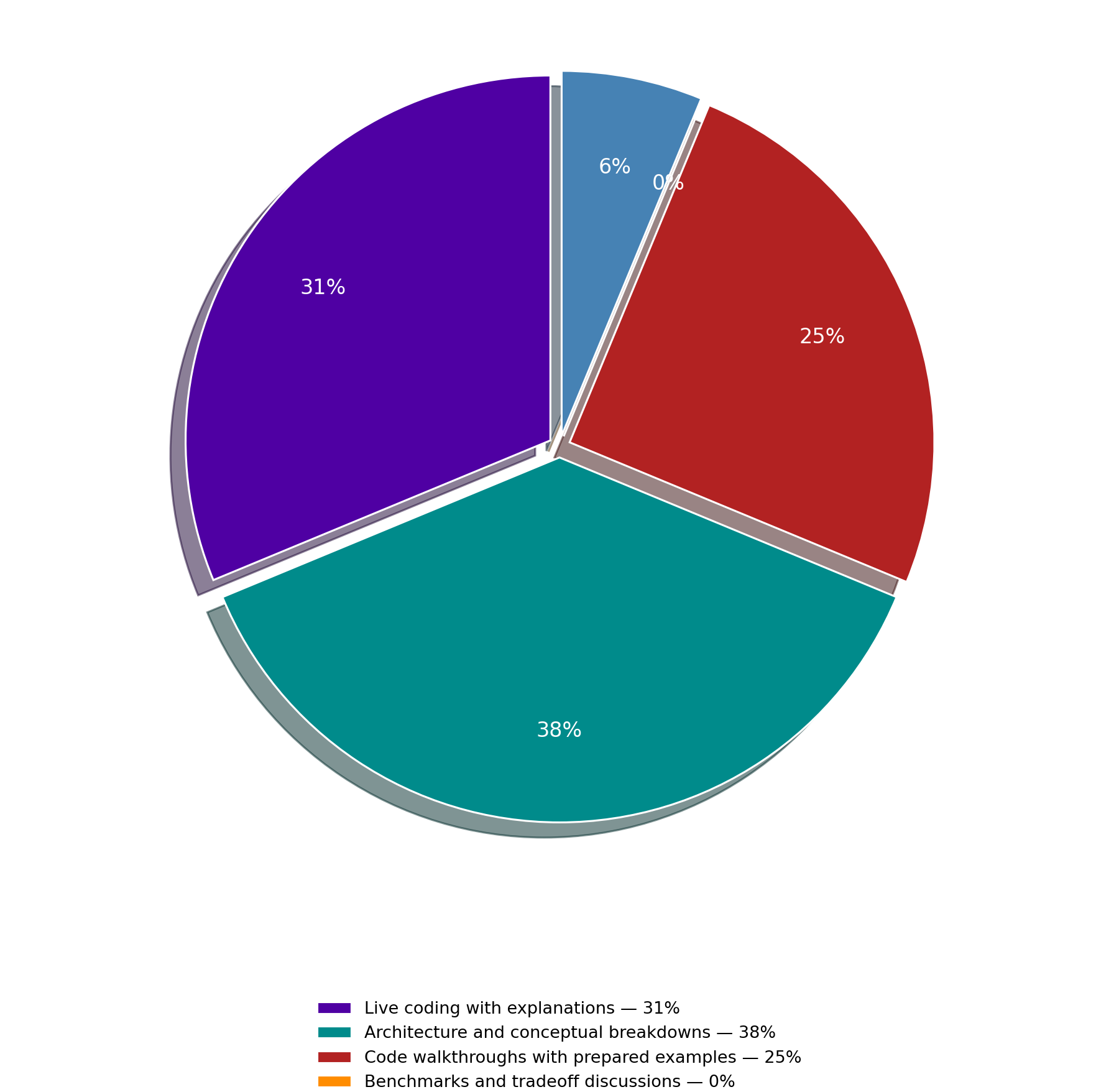
38 percent prefer architecture and conceptual breakdowns. This lines up with earlier insights. Developers want clarity on how things work, why certain choices were made and how each decision connects to the bigger picture.
31 percent prefer live coding with explanations. This format gives them visibility into the flow, the decisions and the small steps that get skipped in polished demos.
25 percent chose code walkthroughs with prepared examples, which shows that structured explanations are still valuable when the creator takes the time to break things down properly.
Benchmarks and tradeoff discussions scored zero percent, which is another subtle contradiction. Many teams assume developers want performance comparisons, but developers actually prioritize understanding the flow first.
The bottom line
Developers prefer videos that take time to teach the idea properly. The best range is fifteen to thirty minutes, supported by either architecture breakdowns or live coding. If a video is too short or too polished to show the reasoning, developers feel like they are only getting the surface.
4. How developers want videos to be delivered
Once the ideal length and format were clear, the next step was understanding how developers want the content delivered. Pacing and narration style decide whether someone stays until the end or drops off after a few minutes. These two elements control how the information lands.
What pacing makes developers stay engaged?
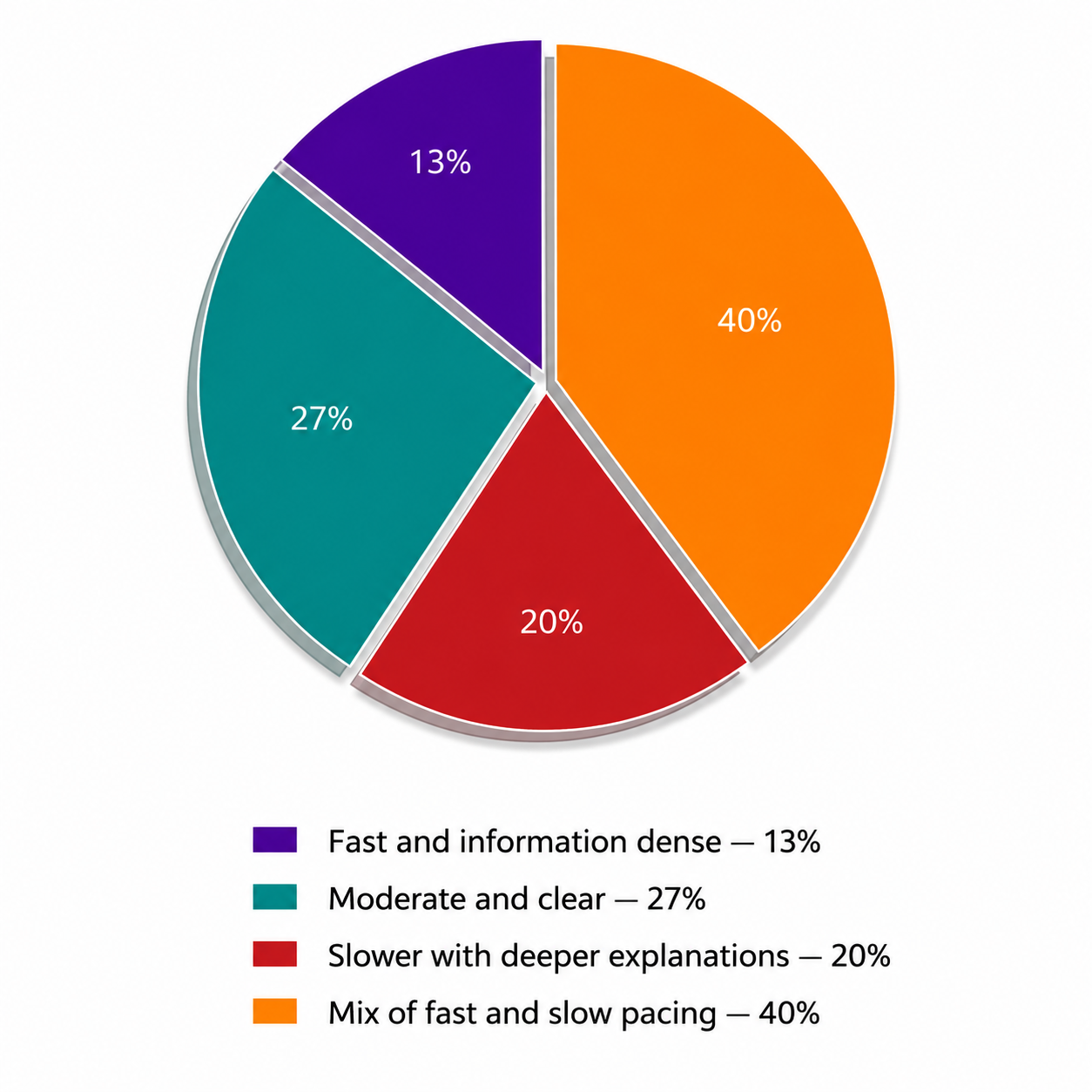
40 percent prefer a mix of fast and slow pacing. Quick on simple parts, slower on the complex ones. Developers want to move through the straightforward steps without friction, but when something needs explanation, they want the creator to pause and guide them properly.
27 percent prefer a moderate and consistent pace, and 20 percent want a slower, deeper explanation. Only a small group prefers fast and dense narration.
The interesting pattern here is that pacing is not about speed. Developers do not reward videos that are fast. They reward videos that know when to slow down. A subtle contradiction shows up again. Many creators worry about going too slow, yet both this section and the frustrations section show that developers are happy with slower explanations when the concept requires it.
What narration style do developers prefer?
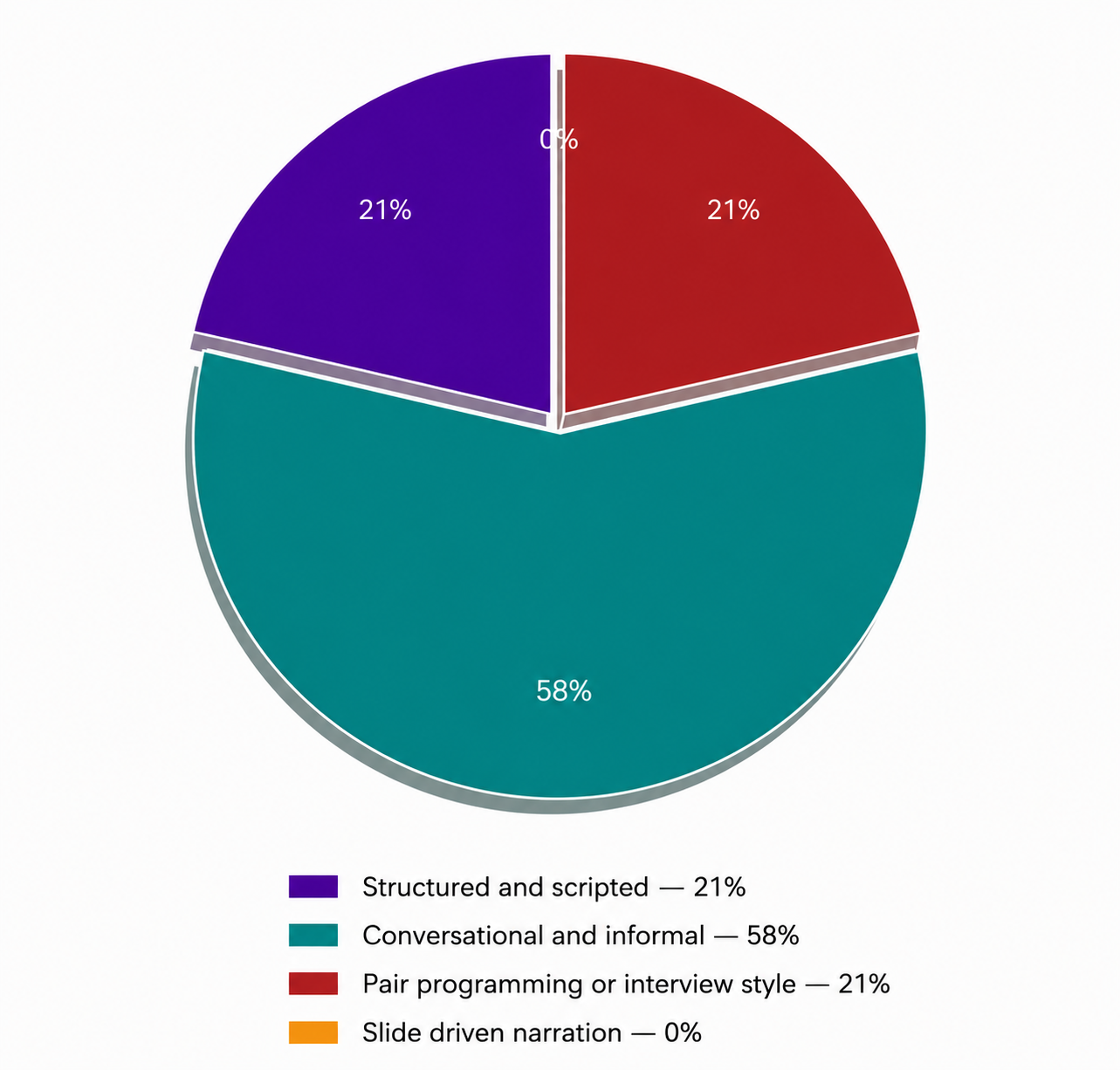
The narration question was even more decisive. 57 percent prefer a conversational and informal tone. Developers want the feeling of someone walking them through the work, not reading from a script. This style makes it easier to follow the flow, understand decisions and stay engaged.
21 percent prefer structured and scripted narration, and another 21 percent prefer a pair-programming or interview-style flow. Both work as long as they feel grounded and not overly rehearsed.
Slide-driven narration received 0 percent. This is an important signal. Developers do not want videos that resemble presentations. Slides hide the practical parts, and they make the content feel distant rather than hands-on.
This is one of the strongest contradictions in the entire survey. DevTools still ship slide-heavy technical videos, yet developers do not want them at all.
The bottom line
Developers stay engaged when the creator moves quickly through the simple parts, slows down for the complex ones and explains the work in a natural, conversational voice. Overly scripted narration and slide-driven delivery break attention because they hide the real flow behind presentation.
5. What makes a video “high quality” for developers
When developers judge the quality of a technical video, they focus on a few very specific signals. The responses to this question were split almost evenly between two factors that matter the most.
What developers evaluate first in terms of quality
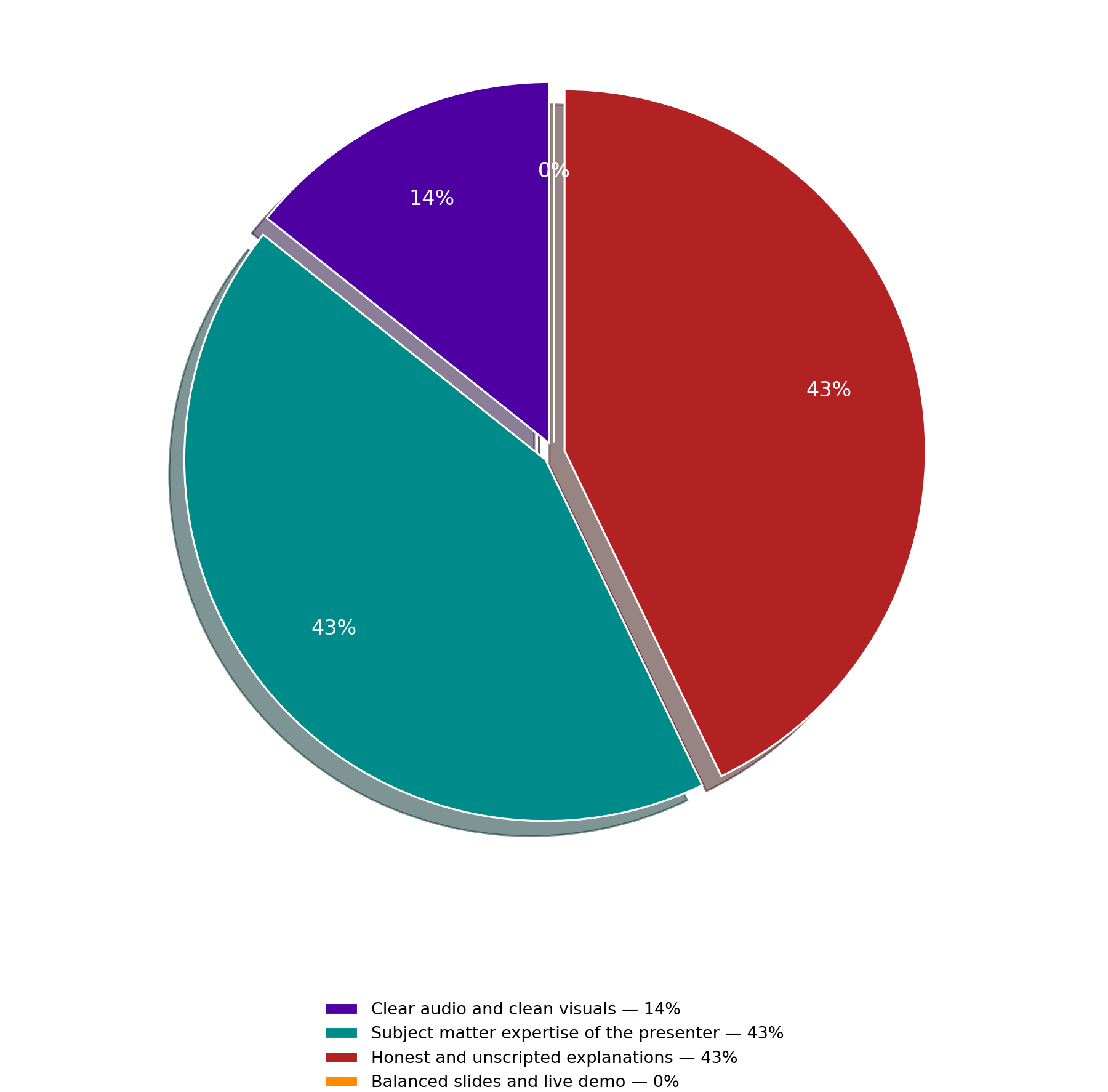
Two factors tied for first place at 43 percent each:
- Subject matter expertise of the presenter
- Honest and unscripted explanations
This means almost nine out of ten developers judge quality based on whether the presenter actually understands the topic and whether the explanation feels genuine. Developers pay attention to how someone reasons through the logic, how they explain tradeoffs and whether the flow feels real rather than polished.
Only 14 percent selected clear audio and visuals. Good production helps, but developers care more about depth than polish. They are willing to tolerate imperfect audio if the teaching is strong.
Zero percent chose balanced slides and demos. This is one of the clearest signals in the entire survey. Slide decks, transitions and presentation design do not make a technical video feel high quality. In many cases they get in the way by hiding the real work behind statements instead of showing the process.
The bottom line
Developers judge quality by the presenter’s depth and the honesty of the explanation. They value reasoning over production quality and practical flow over good design. If the teaching feels scripted or shallow, developers lose confidence no matter how good the video looks.
6. The supporting material developers expect
Supporting material plays a major role in how useful a technical video feels. Developers want to try things themselves, revisit specific parts and follow along without guessing. When I asked what helps the most, one response dominated everything else.
What developers want alongside the video
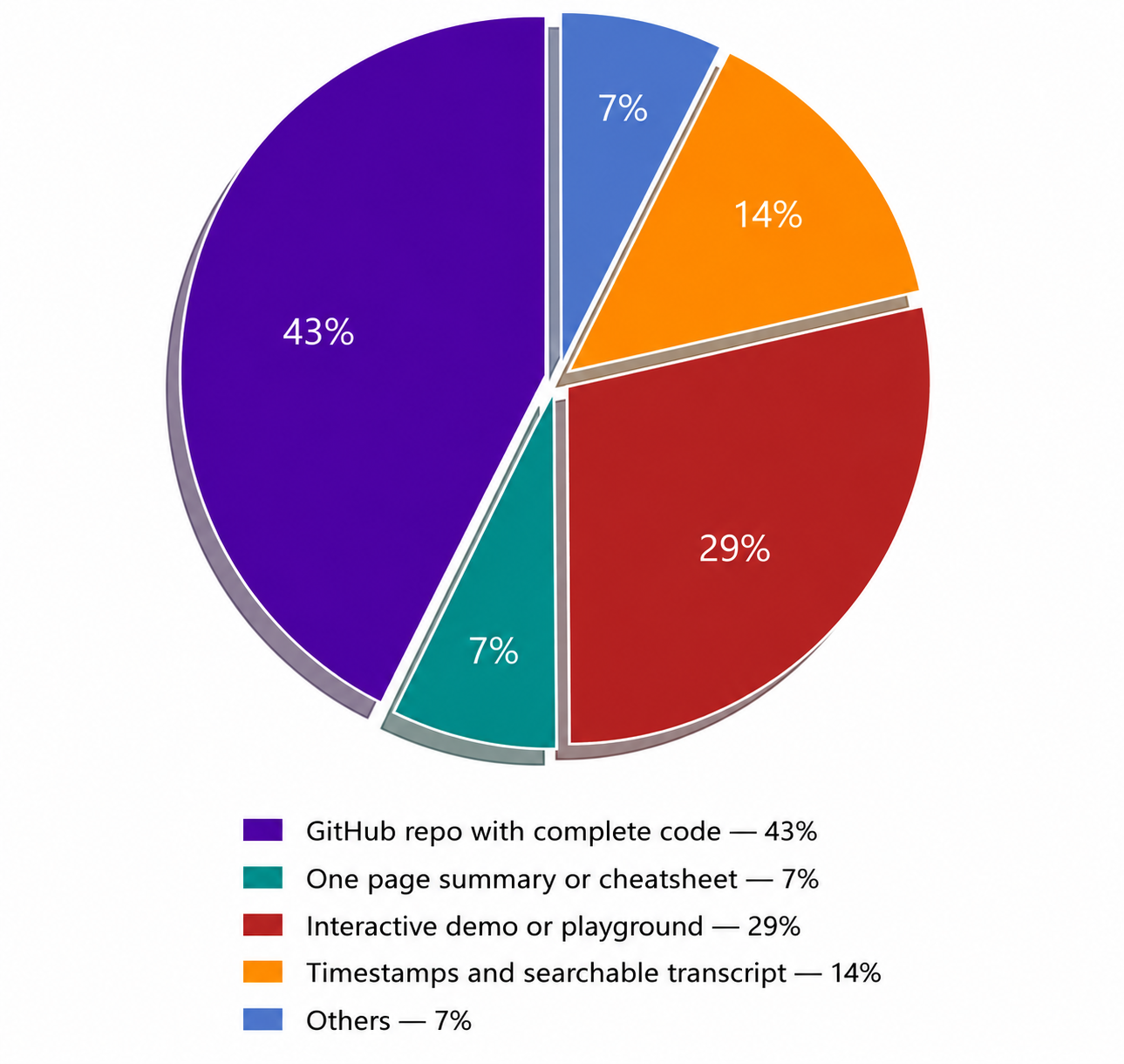
43 percent chose a GitHub repo with complete code. This is the strongest signal in this entire section. Developers want something they can clone, run and inspect line by line. A complete repo removes the guesswork around setup, dependencies or missing pieces, and it shows that the creator prepared the content with care.
29 percent selected an interactive demo or playground. This works especially well for frontend, API and integration topics where quick experimentation matters. It gives developers a fast way to test without setting up a full project.
14 percent want timestamps and a searchable transcript, which helps them revisit specific parts without scrubbing through the entire video. Only 7 percent preferred a one-page summary or cheatsheet. Helpful, but not a core need.
Developers want materials that save time and give them something they can use immediately. Anything static or decorative ranks low.
How much setup process developers want to see?
I asked another question to understand how much of the setup process viewers expect.
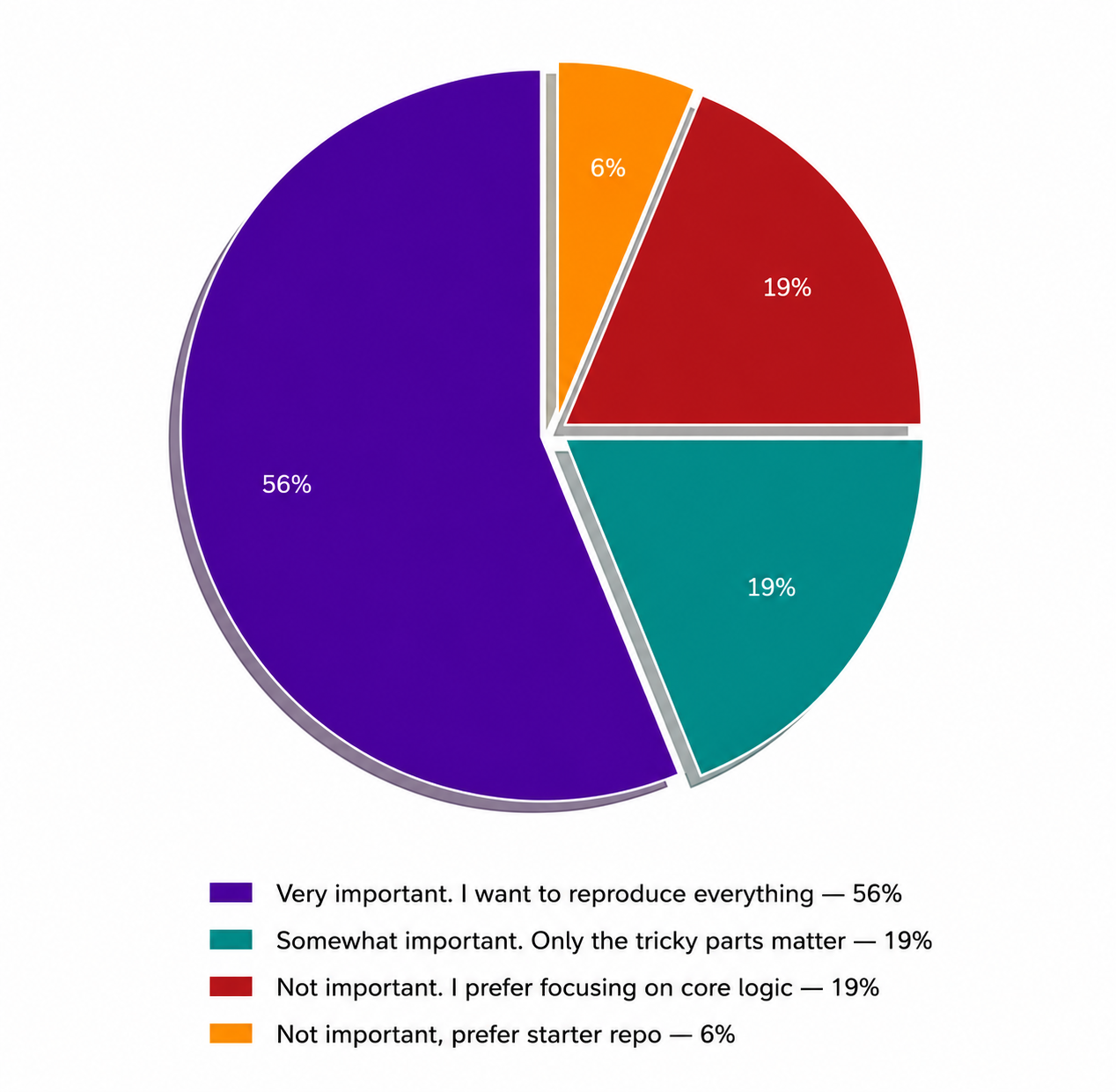
51 percent want the full setup. They do not want gaps in installation, configuration or project structure. A complete setup walkthrough lets them reproduce everything on their own machine without guessing.
19 percent said only the tricky parts matter, and another 19 percent prefer to skip setup entirely and focus on core logic. Both groups are comfortable as long as nothing essential is hidden.
A small group, 6 percent, prefer having a starter repo instead of a walkthrough. This still supports the same theme: give them a working foundation.
There is a subtle contradiction here. Developers dislike long videos, yet more than half want full setup. This shows how much they value reproducibility over brevity.
The bottom line
Developers trust videos that give them everything they need to follow along without guessing. A complete GitHub repo, a reproducible setup and an easy way to test the code matter far more than summaries or slides. Without these, even a clear explanation feels incomplete.
7. Where developers actually discover video content
This was one of the simplest questions in the survey. The answers were completely one sided. When developers look for technical videos, they all go to the same place.
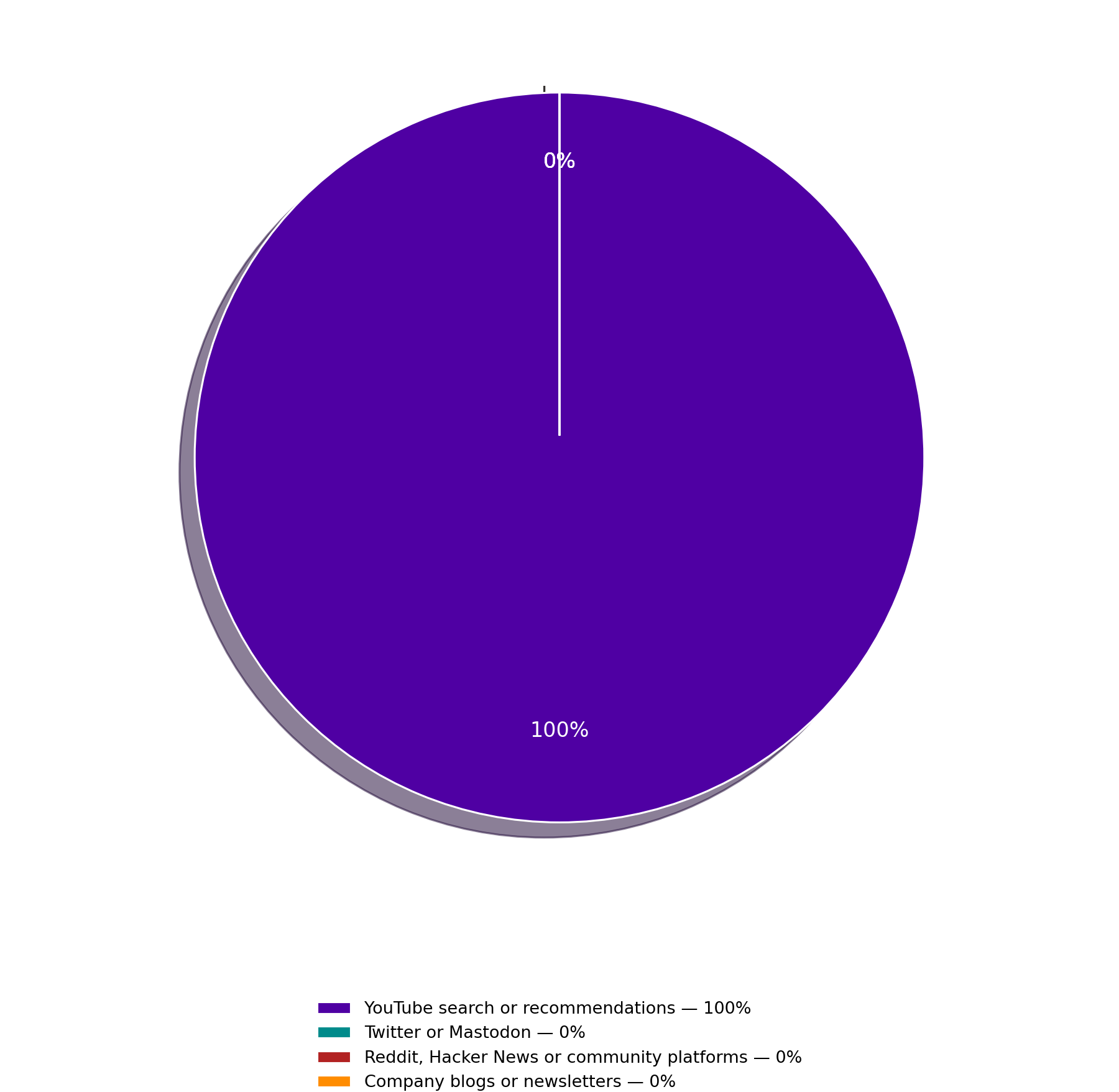
100 percent of respondents discover technical videos on YouTube.
Not most. Not almost everyone. Every person who answered this question picked YouTube. None of the other sources received a single vote. Not Twitter or Mastodon. Not Reddit or Hacker News. Not company blogs, community platforms or newsletters.
Developers treat YouTube as the main destination for technical videos. This is where they search for explanations, walkthroughs, debugging help, architecture breakdowns and anything that needs a visual explanation. Other platforms might help with sharing or visibility, but discovery happens on YouTube.
Note: For the full breakdown of where to distribute video content - which platforms, which communities, which placements - where to distribute developer content covers platforms, communities, and placements with specific tactics for each.
The bottom line
If a technical video is not on YouTube, developers will not discover it. This is the platform they trust, the one they search and the one they expect creators to use. If your content lives elsewhere, it will be invisible.
8. What makes developers share a video
Sharing is one of the strongest signals of how good a technical video is. Developers rarely share technical videos casually. They only do it when a video is clear enough, useful enough or strong enough that they feel confident passing it on to someone else. The responses to this question were very direct.
Why developers decide to share a video
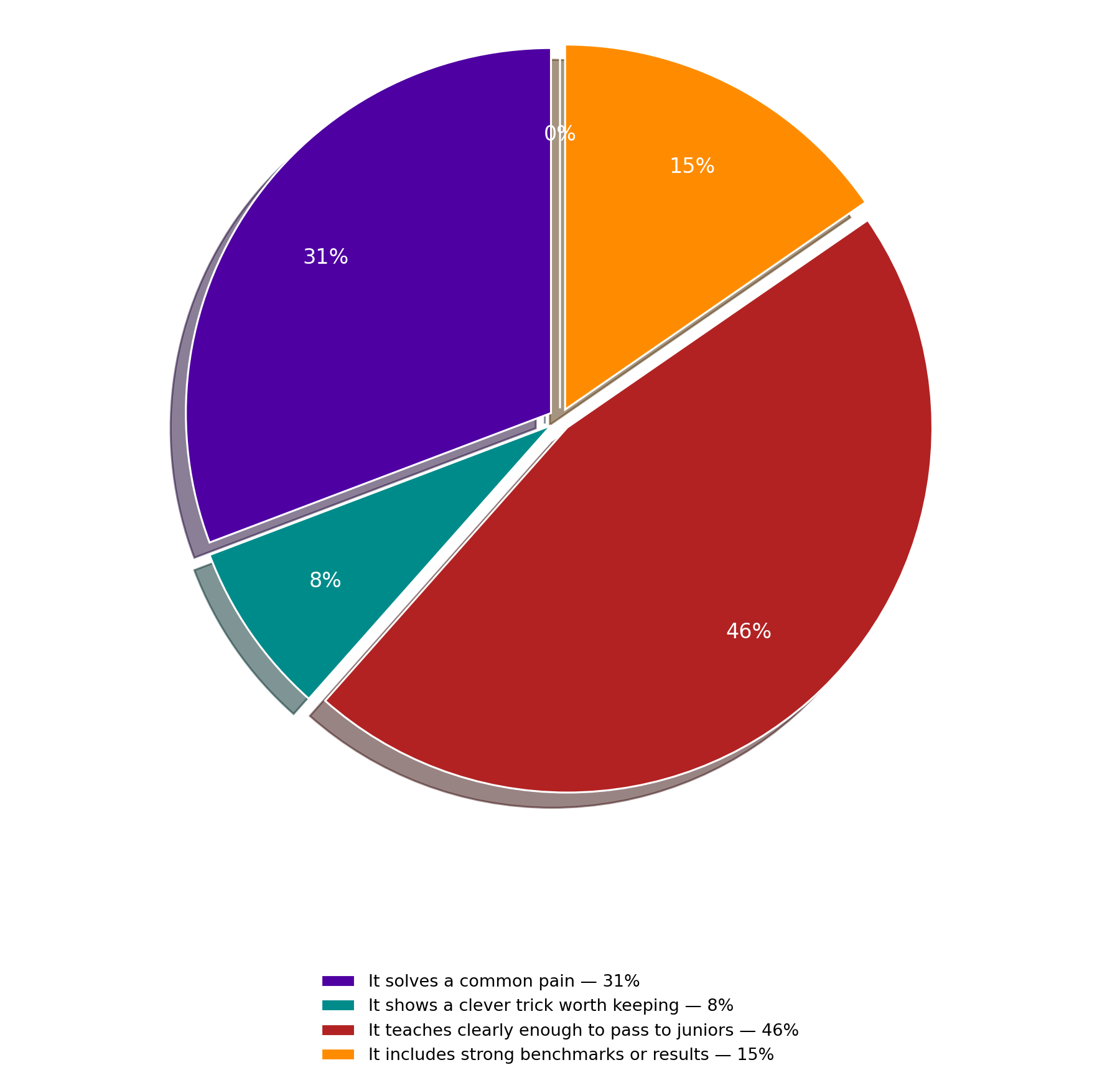
The largest group, 46 percent, share a video when it teaches something clearly enough that they can pass it on to juniors or teammates. This shows that clarity is not just about watch time. It determines how far a video travels. If someone can watch a video once and confidently recommend it, the content has done its job.
31 percent share videos that solve a common pain. These are the ones that remove blockers, save time or show a simpler way to approach a problem. When a problem affects many people inside a team, a video that fixes it becomes easy to circulate.
A smaller group shares videos that show strong benchmarks or clever tricks, but these are secondary. The main drivers are clarity and usefulness.
What helps developers retain the information
To understand what makes a video stay in someone’s mind, I asked a follow up question.
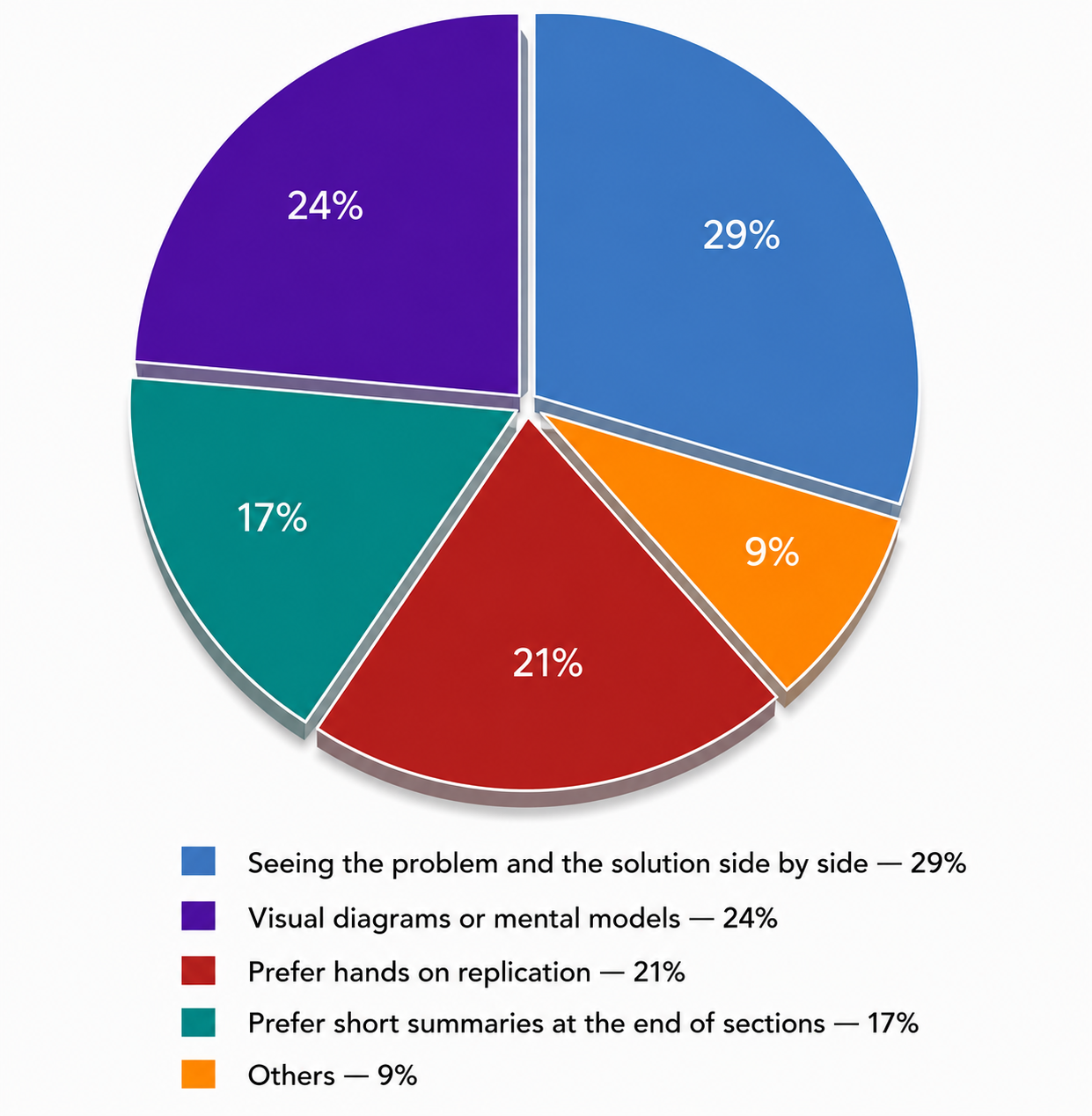
29 percent said they retain information best when the problem and solution are shown side by side. This reduces cognitive load. Developers can see the issue, understand the reasoning and watch the fix happen in context.
24 percent rely on visual diagrams or mental models. This reinforces how much developers value structure over presentation.
21 percent prefer hands on replication, and 17 percent prefer short summaries at the end of sections. Both help anchor information and make the content easier to revisit.
The bottom line:
Developers share videos that are clear, practical and easy to pass on. If the idea is explained cleanly and the problem is solved in a way others can use immediately, the video spreads. They remember content that shows the problem and solution together, uses simple visuals and gives them something they can try on their own. If the flow is confusing or the explanation is thin, the video stays inside one tab and never gets shared. Will Russell who helps multiple devtools with video content creation, speaks about how to get it right, do check it out:
Wrapping up: developer video checklist
Based on everything in this guide and what we have learned from making technical videos ourselves, here is the checklist to aim for when creating video content for developers.
Developer video checklist
- State the assumed knowledge level at the start.
- Get into the topic quickly without basic filler.
- Keep the video between 15 and 30 minutes.
- Use architecture breakdowns, conceptual explanations or live coding.
- Move fast on simple steps and slow down on complex parts.
- Use a conversational tone instead of reading a script.
- Avoid slides unless they support the demo directly.
- Show the full setup so the viewer can reproduce the work.
- Provide a complete GitHub repo that runs without fixes.
- Include an interactive demo or playground when useful.
- Add timestamps and a transcript for quick navigation.
- Keep all code visible and avoid skipping key steps.
- Explain decisions and reasoning while you work.
- Keep the screen readable at all times.
- Publish on YouTube because this is where developers search.
- Avoid any marketing language in the video.
- Use examples that match how developers actually work.
- Test the repo and instructions end to end before recording.
- Show the problem and solution close together so the flow is clear.
- Give viewers something they can try right after the video.
How this shapes our work at Hackmamba
This report shaped how we produce videos for clients. Everything in the checklist comes from what developers told us and what we have seen firsthand while creating technical content. Clear reasoning, runnable code, reproducible setups and conversational delivery are now the baseline for every video we produce.
Work with Hackmamba
Technical videos are becoming an increasingly important part of how developers learn, evaluate, and adopt tools. They help explain workflows, demonstrate implementation steps, and reduce the time it takes for developers to reach a successful outcome.
They are also becoming more valuable in AI-powered search experiences. Unlike text, videos can demonstrate processes, provide visual context, and surface implementation details that are difficult to compress into a short summary. The AI search optimization guide explores this in more detail, including why video is one of seven key components for improving visibility in AI-generated results.
If you're looking to create technical videos that developers can quickly understand and apply in their day-to-day work, Hackmamba can help. As a technical video marketing agency, we help devtools companies produce educational video content, from research and scripting to recording, editing, and distribution. Our focus is creating videos that support developer adoption, product education, and long-term discoverability.
We also distribute content across YouTube and developer-focused channels to ensure it reaches the right audience at the right stage of their journey. If you'd like to discuss your video strategy, book a call with us.
For a broader look at how video fits into developer acquisition and adoption, the complete developer marketing guide covers strategy, channels, GTM, and measurement across the entire developer journey.